
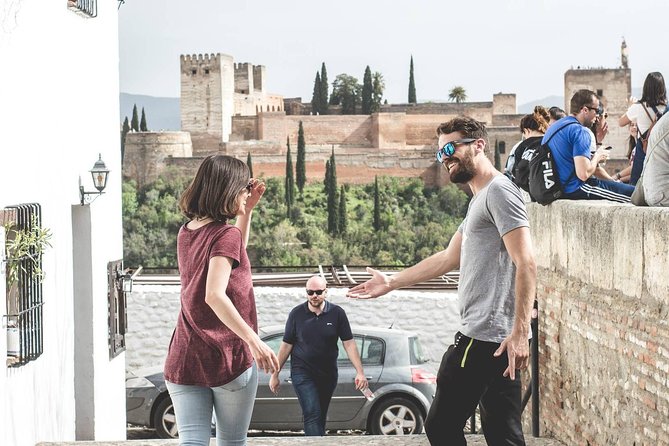
Reviewed · ALBAICIN & SACROMONTE TOURS
Granada’s Hidden Treasures: Albayzin and Sacromonte Walking Tour
Granada’s best views often come after a climb. This two-hour walk takes you through the old Albaicín and up into Sacromonte, where whitewashed cave homes, flamenco traditions, and sweeping views of the Alhambra give the city a very different feel from the busy center below. The stops at Mirador de San Nicolas and Mirador de Los Carvajales are the main prizes.
I like two things here. First, a guide helps you make sense of streets that can feel like a maze, especially in Albaicín. Second, the walk connects sights that are easy to visit separately: the old Muslim quarter, Sacromonte’s cave district, the Alhambra viewpoints, and the Paseo de los Tristes. Guides Mario and Mia receive especially strong praise for their warm, conversational approach.
The catch is simple: this is an uphill walk with stairs, and the tour may feel light on formal history if you want a detailed lecture at every stop. There have also been occasional problems with cancellations or missed departures, so keep your booking messages handy and arrive early.
In This Review
- Key points to know before you book
- Starting on Carrera del Darro
- Mirador de Los Carvajales: a quieter first view
- Mirador de San Nicolas and the Alhambra view
- Albaicín: Granada’s old hill quarter
- Sacromonte and the cave-home tradition
- Paseo de los Tristes: an easy finish
- What the guides add to the walk
- Price, pace, and overall value
- The drawbacks you should take seriously
- Who should book this Granada walk?
- Should you book it?
- FAQ
- How long does the Albayzin and Sacromonte Walking Tour last?
- Where does the tour begin?
- Where does the tour end?
- Is the Alhambra included?
- Is food or drink included?
- What language is the tour offered in?
- How large is the group?
- Is the walk physically demanding?
- Can children and service animals join?
Key points to know before you book
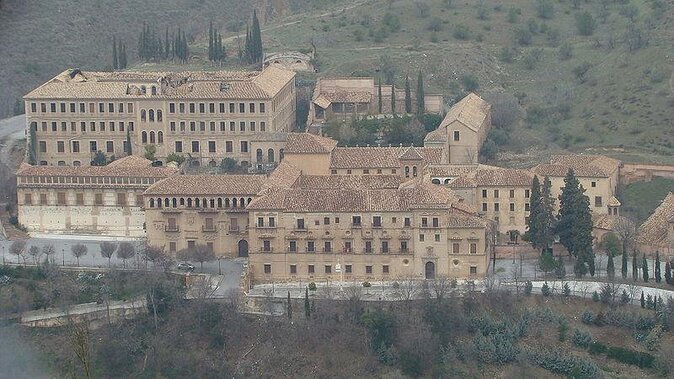
- Two famous Alhambra viewpoints: Mirador de Los Carvajales and Mirador de San Nicolas provide different angles for photographs and orientation.
- Sacromonte cave homes: You’ll explore the district’s cave architecture and learn how it connects with local flamenco culture.
- A small group helps: The maximum is 15 people, and some departures have been much smaller, making it easier to hear and ask questions.
- Mario and Mia are popular guides: Their style is warm and conversational, with practical suggestions for tapas, flamenco, coffee, and ice cream.
- Good shoes matter: The route includes steep climbs and many steps, though guides typically pause and set an easy pace.
- A useful two-hour overview: This is a good introduction to Granada’s hill neighborhoods, not a replacement for a full Alhambra visit.
Starting on Carrera del Darro
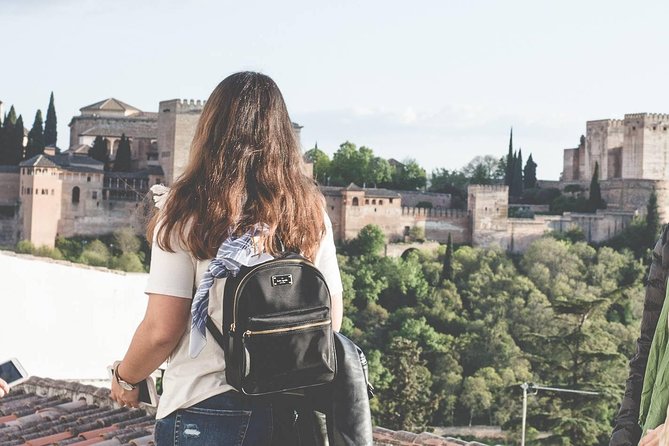
The meeting point is at Carrera del Darro, 1, in Albaicín. This puts you near one of Granada’s most atmospheric streets, beside the Darro River and close to the historic center. You return to the same meeting point at the end, so you do not need to arrange a ride from a distant neighborhood.
Arrive five to ten minutes before departure. That matters here because the opening section quickly leads into narrow streets and uphill lanes. The tour includes a local guide, free WiFi, and a phone charging station, though the real value is the route knowledge and local context.
The group can contain up to 15 people. That is still manageable for a walking tour, but a smaller departure is better for this setting. The lanes can be tight, and it is easier to hear a guide when the group is closer to seven people. Mario and Mia are both praised for stopping often, answering questions, and checking that everyone can keep up.
More walks through the Albaicin and Sacromonte:
- Granada: Albaicín and Sacromonte Guided Sunset Walking Tour
★ 4.9 · 2,962 reviews - Sacromonte: Flamenco Show at Cuevas Los Tarantos Tickets
★ 4.5 · 2,051 reviews - Granada: Flamenco Show in Albaycin – Jardines de Zoraya
★ 4.7 · 1,234 reviews
Mirador de Los Carvajales: a quieter first view
The first stop is Mirador de Los Carvajales, with about 15 minutes set aside for the view. Granada has no shortage of lookout points, but this one helps ease you into the city’s unusual layout before the route climbs higher.
This is a good place to start because the view is not just a photo stop. Your guide can point out how Albaicín rises above the city and how the Alhambra sits across the valley. The time is short, so expect an introduction rather than a long talk.
Bring your phone or camera ready. The route is built around several quick pauses, and the best pictures often come during those pauses rather than while walking. If you prefer a slow morning with time to compose photographs, two hours may feel brisk.
Mirador de San Nicolas and the Alhambra view
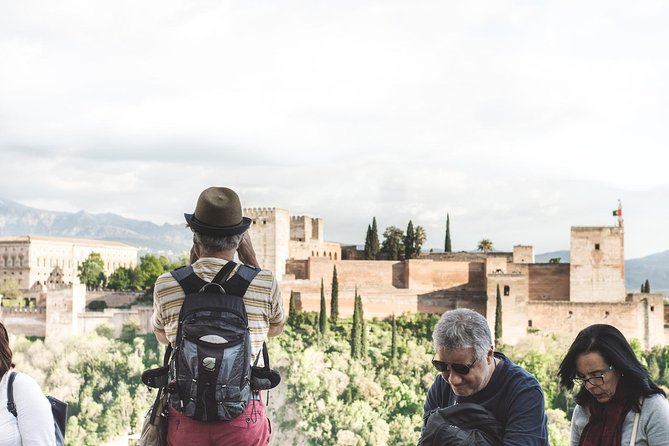
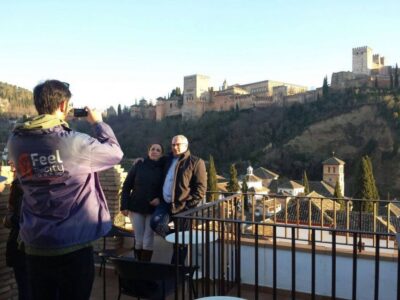
Mirador de San Nicolas is Granada’s most famous lookout on this route. From here, the Alhambra appears across the valley, backed by the Sierra Nevada when conditions allow. The view explains why this neighborhood is such a key part of a Granada visit.
The guide adds useful context about the Alhambra and the surrounding quarters. This does not include entry to the Alhambra, and it should not be treated as an Alhambra tour. Instead, you see the complex from outside and gain a better sense of its setting before or after your ticketed visit.
San Nicolas can be busy, especially around popular viewing times. A guided visit saves you from guessing which lanes lead there, but it cannot remove the crowds at a public viewpoint. You may find the earlier Carvajales stop calmer, while San Nicolas delivers the more instantly recognizable photograph.
Albaicín: Granada’s old hill quarter
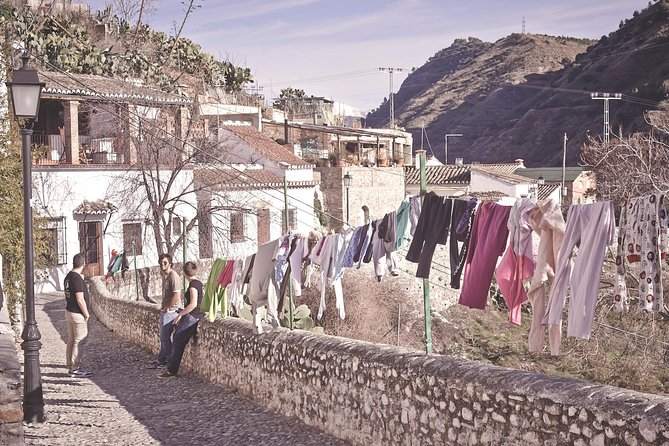
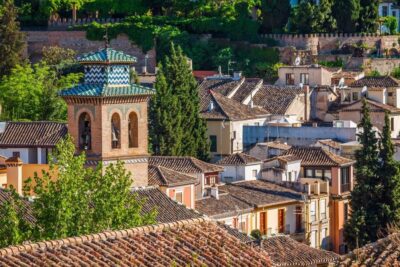
The walk through Albaicín lasts about 30 minutes. This is the heart of the experience for anyone who likes old neighborhoods more than formal monuments. Whitewashed buildings, winding lanes, small plazas, and sudden views create a place that feels best understood on foot.
Albaicín shares its UNESCO World Heritage status with the Alhambra, a fact that gives the neighborhood real importance beyond its good views. Its value is in the whole setting rather than one single building. Every turn helps show how Granada’s different eras fit together.
A guide is particularly useful here. Without one, you can wander pleasantly but miss the meaning behind the streets and viewpoints. Mario is praised for explaining small details that are easy to pass without noticing, while Mia is praised for bringing past residents and local traditions to life.
Still, expectations matter. Some departures may focus more on atmosphere, navigation, and neighborhood stories than on a full account of Granada’s political and religious history. If you want a dense historical lecture, ask questions as you walk. The strongest guides on this route use conversation rather than reading a fixed script.
More guided walks on foot:
- Guided Walking Tour of the Alhambra in Granada
★ 4.0 · 863 reviews - Granada: Albaicín and Sacromonte 2.5-Hour Walking Tour
★ 4.7 · 777 reviews - Granada: Albaicín and Sacromonte Walking Tour
★ 4.5 · 665 reviews - Granada: Walking Food Tour
★ 4.8 · 460 reviews
Sacromonte and the cave-home tradition
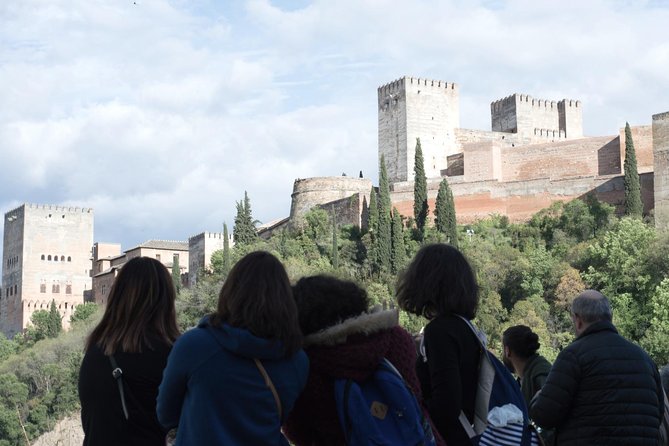
The tour then moves into Sacromonte, with roughly 30 minutes devoted to the district. This is the most distinctive part of the route. Sacromonte is known for homes built into the hillside, and the cave architecture gives the neighborhood a look you will not find in Granada’s central streets.
The route introduces the local flamenco tradition, especially its connection with the district’s Roma community. That cultural link helps explain why Sacromonte is associated so strongly with flamenco performances. The tour does not include a flamenco show, so think of this as a cultural introduction rather than an evening performance.
A particularly interesting part of the walk can be seeing inside an actual cave house. The experience gives you a clearer idea of how these homes function than an exterior photograph alone. Because the stop is limited to about half an hour, the amount of interior access or explanation may depend on the day’s guide and route.
Sacromonte is also where the physical demands become more obvious. The climb includes steep sections and uphill steps. Guides such as Mario have been praised for setting a steady pace and pausing so people can catch their breath before continuing. You should still have a moderate level of fitness and wear shoes with a firm grip.
Paseo de los Tristes: an easy finish
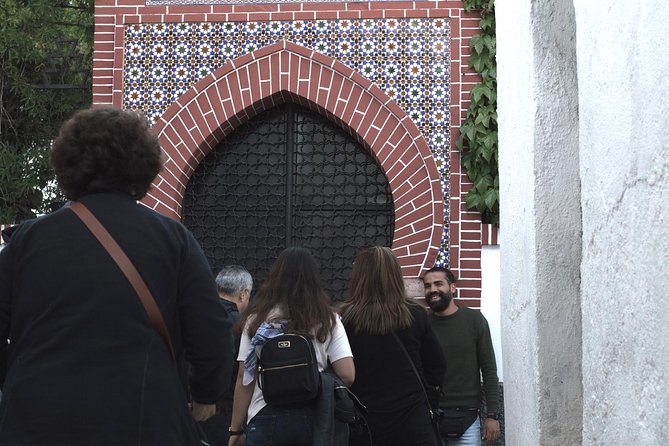
The final stop is the Paseo de los Tristes, a historic avenue beside the Darro River. The name has a curious past, and the guide uses it as a doorway into local stories rather than treating the street as just another photo stop.
This is a pleasant way to finish because the pace becomes easier after the climb. You can take photographs, look back toward the hillside, and notice the bars and tapas spots along the route. Guides may also offer suggestions for places to eat or drink. Mario has been singled out for useful tapas advice, including a recommendation for Riviera.
The stop lasts about 15 minutes. That is enough for a quick orientation and a few pictures, but not enough for a full tapas crawl. If you plan to eat afterward, stay near the meeting point or ask your guide for a suggestion that fits your schedule.
What the guides add to the walk
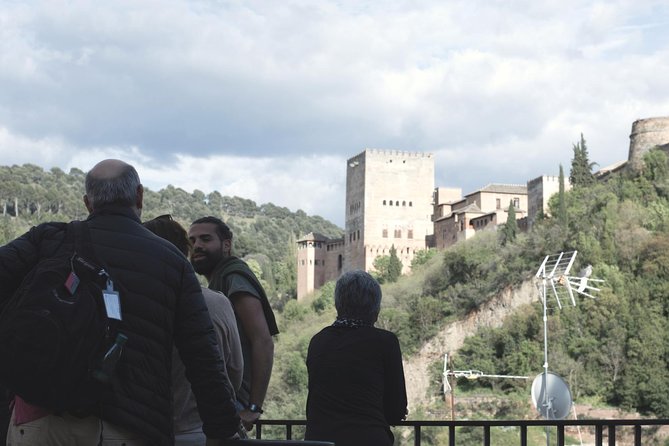
The guide can make or break a neighborhood tour, and this experience has several guides who receive strong praise. Mario is repeatedly described as warm, enthusiastic, and easy to talk with. He is also valued for answering questions and offering personal suggestions for tapas, flamenco, coffee, and ice cream.
Mia receives similar praise for clear explanations, local detail, and an entertaining style. She is also credited with good route-finding, which matters in Albaicín, where a wrong turn can cost time and energy. Marco is described as pleasant and informed, with a small group making it easy to hear him.
The best part of this guide style is the conversation. You can ask about Granada, the neighborhoods, food, or local customs instead of simply listening to a speech. That makes the walk more useful as an introduction to the rest of your stay.
There is some inconsistency in the depth of the commentary. You may get a lively account full of details, or a simpler overview of the main areas. If history is your priority, make that clear through questions. The format leaves room for interaction, and a good guide can respond to what interests you.
Price, pace, and overall value
At $30.23 per person, this is reasonably priced for a two-hour guided walk, especially if you are new to Granada and want help connecting Albaicín with Sacromonte. You are paying for a local guide, route planning, viewpoints, and cultural background, not admission to a major monument.
The value is strongest if you would otherwise spend time searching for the viewpoints and figuring out the hill streets. It is weaker if you enjoy wandering alone and are happy to read about the neighborhoods as you go. One departure was considered poor value by someone who preferred a self-guided pace, and that is a fair criticism for independent walkers.
The two-hour length works well as a first look. It is long enough to see the main areas without taking over your day, yet short enough to fit before lunch or another scheduled activity. You may want more time in Sacromonte or at San Nicolas, but a longer walk would also make the hills more tiring.
The tour is offered in English and accepts mobile tickets. Children must be with an adult. Service animals are allowed, and the meeting point is near public transportation, but hotel pickup and drop-off are not included.
The drawbacks you should take seriously
The hills are the biggest issue. Several parts of Albaicín and Sacromonte require stairs or steep walking, so this is not a good choice if you need a flat route. Even with rest stops, the climb can be tiring in warm weather.
The route also does not cover every sight in central Granada. Some people may expect a large square or a famous pastry shop and find that the walk focuses instead on the two hill neighborhoods. It is best viewed as a focused Albaicín and Sacromonte tour, not a complete city tour.
There have also been reports of late cancellations, overbooking, a sick guide, and a guide failing to arrive. These appear to be occasional but serious problems. The published policy allows free cancellation up to 24 hours before the start, while cancellations inside that period are not refundable. If the operator cancels because the minimum group size is not met, you should be offered another date or a full refund. Check your messages before leaving and arrive early enough to contact the office if something goes wrong.
Who should book this Granada walk?
I would choose this tour if you want a quick orientation to Granada’s hill quarters, prefer company while walking unfamiliar streets, and enjoy learning through questions and conversation. It suits first-time visitors, photographers, and anyone who wants Alhambra views without spending the whole morning inside a monument.
It also works well near the beginning of a Granada stay. Afterward, you will have a better sense of where to return for tapas, flamenco, or another look at the Alhambra from San Nicolas. The route can help you decide which neighborhoods deserve more of your own time.
I would think twice if you dislike hills, want a highly formal history lesson, or prefer to stop whenever you like. Independent walkers can cover the same districts at a slower pace, though they will need to handle directions and background on their own.
Should you book it?
Book it for the views, the cave district, and the help of a local guide. Mario and Mia are strong names to hope for, and the small-group format can make the walk relaxed and easy to follow. The $30.23 price is fair for a compact introduction to two of Granada’s most characterful quarters.
Just wear proper walking shoes, allow for stairs, and keep your schedule flexible in case of an operator problem. If you want a full Alhambra visit or a detailed academic history of Granada, book those separately. If you want a practical first look at Albaicín and Sacromonte, this walk earns serious consideration.
FAQ
How long does the Albayzin and Sacromonte Walking Tour last?
The tour lasts approximately two hours.
Where does the tour begin?
It begins at Carrera del Darro, 1, in Albaicín, Granada.
Where does the tour end?
The activity ends back at the meeting point.
Is the Alhambra included?
No. Alhambra admission tickets are not included. The tour provides views of the Alhambra and information about it from the surrounding neighborhoods.
Is food or drink included?
No. Food and drinks are not included, though the Paseo de los Tristes has tapas bars and guides may offer local suggestions.
What language is the tour offered in?
The tour is offered in English.
How large is the group?
The tour has a maximum of 15 people.
Is the walk physically demanding?
You should have a moderate level of physical fitness. The route includes steep climbs and many steps, and comfortable shoes are recommended.
Can children and service animals join?
Children must be accompanied by an adult, and service animals are allowed.
Just added around Granada
- Granada: Alhambra tickets and other attractions★ 5.0 · 3 reviews
- Antequera and Torcal from Granada in a small group up to 7 people★ 4.5 · 3 reviews
- Granada Private Tapas & Walking Tour★ 4.5 · 3 reviews
- Albaicin and Sacromonte Private Tour★ 4.5 · 3 reviews
- Complete Private Tour of Alhambra with Nasrid Palaces★ 4.5 · 3 reviews
- Sierra Nevada Small Group BIKE Tour★ 5.0 · 3 reviews
- Private Tour of the Alhambra★ 5.0 · 3 reviews
- Granada: Guided Albaicín Visit with Pets★ 5.0 · 3 reviews
Albaicin & Sacromonte Tours, compared.
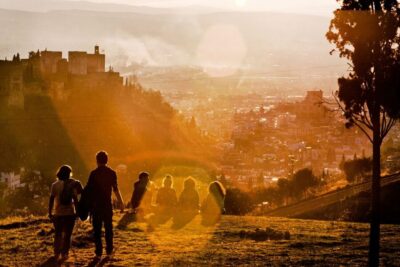
Albaicín and Sacromonte Guided Sunset Walking Tour
Read our review →

Flamenco Show in Albaycin – Jardines de Zoraya
Read our review →
Albaicin & Sacramonte Electric Bike Tour in Granada
Read our review →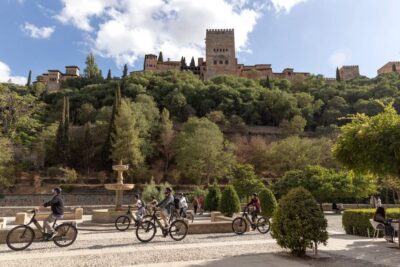

Browse the lists this tour appears in