
Reviewed · NASRID PALACES TOURS
Guided visit to the Alhambra, Nasrid Palaces and Generalife
The star of this three-hour Alhambra tour is the Nasrid Palaces, where delicate stucco, carved wood ceilings, reflective pools, and the famous Court of the Lions turn a royal residence into a lesson in power and design. You will also see the fortress, Christian-era buildings, public streets, and Generalife gardens in one well-planned visit.
I like the way the route combines the palace interiors with the wider Alhambra city, rather than treating the Nasrid Palaces as an isolated monument. I also like the focus on practical details, such as how the water gardens worked, why the Comares Tower mattered, and what happened after the Christian conquest.
The main consideration is the pace. Three hours is enough for a strong overview, but not for a slow, lingering look at every tile and inscription. The route also includes hills, steps, and uneven ground, so it is not recommended for people with reduced mobility.
In This Review
- Key points at a glance
- Why the Nasrid Palaces deserve the first hour
- The Alcazaba and the climb to Torre de la Vela
- Palace of Charles V and the Christian chapter
- Calle Real and the working Alhambra city
- Generalife gardens and the Sultan’s summer retreat
- What the guide adds to the experience
- Is $66.42 a fair price?
- Meeting point, walking demands, and booking rules
- Who should book this Alhambra tour?
- Should you book it?
- FAQ
- How long does the guided Alhambra visit last?
- In which language is the tour offered?
- What parts of the Alhambra are included?
- Is admission included?
- Where does the tour start?
- Does the tour end at the same place?
- How many people can join the tour?
- Is the tour suitable for people with reduced mobility?
- Can I cancel or change the booking?
Key points at a glance
- The Nasrid Palaces take center stage: See the Mexuar, Court of the Myrtles, Comares Tower, Hall of the Throne, Court of the Lions, Hall of the Two Sisters, and Hall of the Kings.
- The Alcazaba adds the fortress story: Climb toward the Torre de la Vela for broad views over Granada, the Albaicín, and the Vega.
- The Generalife shows royal retreat life: Walk through orchards, irrigation gardens, courtyards, and the Sultan’s summer residence.
- Christian changes are part of the story: The route includes the Palace of Charles V, Santa María de la Alhambra, the San Francisco convent, and other later additions.
- The guide’s explanations are a major part of the value: Names associated with the experience include Noelia and Victoria, praised for clear, engaging, and attentive presentations.
- The group can reach 30 people: That is small enough for an organized visit, but not the same as a private tour.
Why the Nasrid Palaces deserve the first hour
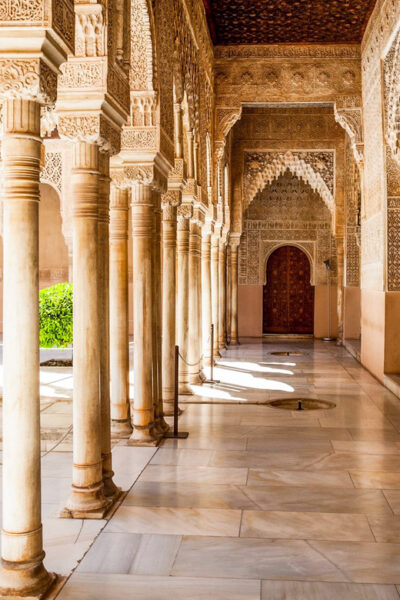
The Nasrid Palaces are the emotional center of the Alhambra. This is where architecture does the talking, but a good guide helps you read it. Look closely at the stucco panels, the geometric decoration, and the carved woodwork. These are not random ornaments. They helped express royal authority, religious ideas, and the skill of the craftsmen who served the Nasrid court.
Your visit begins around the Comares Palace and its administrative section, the Mexuar. This part of the complex gives you a sense of how the palace functioned as more than a private home. Government, audiences, ceremony, and daily court life all required carefully arranged spaces.
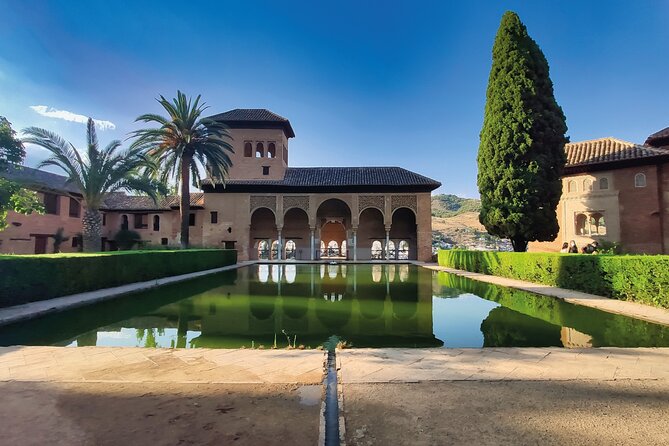
The Patio de los Arrayanes, also called the Court of the Myrtles, brings a calmer visual rhythm. Its long pool reflects the surrounding porticos and the Comares facade. That reflection is not just pretty. It makes the palace appear longer, more balanced, and more controlled. Give yourself a moment here to notice how water changes the architecture.
The Comares Tower contains the Hall of the Throne, one of the places where the political purpose of the palace becomes clearest. The room’s height, decoration, and formal arrangement helped create an impressive setting for royal audiences. Your guide explains the original ceiling techniques and the stucco work, which gives you more to look at than a quick photo stop.
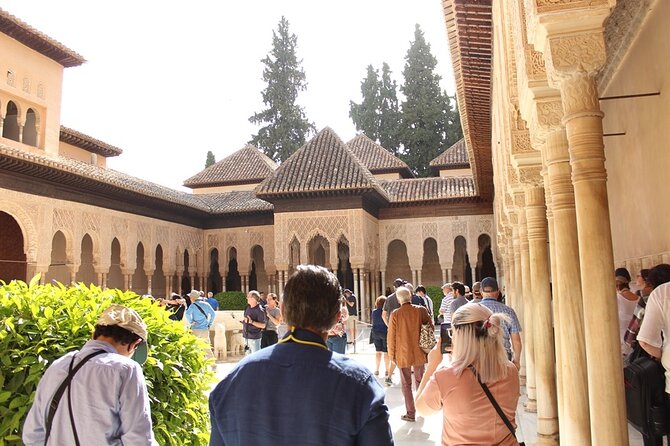
The route then moves to the Palace of the Lions, commissioned under Sultan Mohammed V. Its central courtyard is one of the Alhambra’s best-known spaces, built around the celebrated lion fountain. The surrounding rooms include the Hall of the Two Sisters and the Hall of the Kings, each with its own proportions, decoration, and function.
The Hall of the Two Sisters is especially useful for understanding how the Nasrid builders used light, surface pattern, and ceiling forms. The Hall of the Kings adds another layer to the palace’s ceremonial character. You will not have unlimited time in either room, so listen closely when the guide points out specific details.
The palace section ends around the Partal area and the Torre de las Damas. This closing stretch helps connect the ornate interiors with the broader royal complex. It is a good reminder that the Alhambra was not one building, but a series of palaces, gardens, streets, workshops, military structures, and service areas.
More tours that include the Nasrid Palaces:
- Granada: Alhambra & Nasrid Palaces Tour with Tickets
★ 4.7 · 19,801 reviews - Granada: Alhambra and Nasrid Palaces Entry Ticket
★ 4.6 · 15,130 reviews - Granada: Alhambra & Gardens Tour w/Nasrid Palaces Option
★ 4.5 · 6,437 reviews
The Alcazaba and the climb to Torre de la Vela
After the palace interiors, the Alcazaba changes the mood. Here, decoration gives way to walls, towers, gates, and military planning. You will hear how the defensive part of the palatine city worked and why the fortress occupied such a strong position above Granada.
The climb to the Torre de la Vela is one of the clearest rewards of the tour. From the tower, you can look across Granada, toward the Albaicín, and over the Vega de Granada. The view helps you understand the Alhambra’s position better than any map. The palace was not floating in isolation. It watched over the city and the surrounding plain.
Your guide also explains the tower’s purpose and what changed after the Christian conquest. That context matters because the Alhambra continued to be used and altered after Nasrid rule ended. The building you see today is a layered place, not a perfectly preserved snapshot from one period.
The Alcazaba stop lasts about 25 minutes. That is enough for the main defensive points and the view, but the uphill walk may feel brisk. You will also visit the Jardín de los Adarves and the Puerta de las Armas, adding a little garden and access-route context to the harder military story.
Palace of Charles V and the Christian chapter
The Palace of Charles V is a dramatic change from the Nasrid buildings. This 16th-century structure has a large circular courtyard inside a square exterior, a design that gives it a formal, Renaissance character.
The guide explains the facades, the courtyard, the reasons for its construction, and the symbols built into the design. You will also be shown where the museums are located. The tour does not present the palace as an unrelated interruption. Instead, it uses it to explain how Christian rulers reshaped the Alhambra after taking control.
This stop lasts about 15 minutes, so expect an introduction rather than an extended museum visit. That is a sensible choice on a three-hour route. The palace is visually bold, but if you want to study every architectural detail or spend time inside the museums, you will need a separate visit.
Calle Real and the working Alhambra city
The Calle Real section fills in a gap that many quick visits leave behind. Royal palaces are only one part of the Alhambra. The complex also needed streets, workshops, ovens, religious buildings, housing, and working areas.
You will hear how the public section of the city was arranged and see Christian changes such as the Church of Santa María de la Alhambra. The San Francisco convent is also part of the route. It was once connected with the burial of Queen Isabella and is now a national hostel, giving the area another example of how buildings have changed purpose over time.
The dry-land area includes the ruins of the Palace of the Abencerrajes. The Abencerrajes were a prominent family at the Nasrid court, and their former palace adds a human and political angle to the site. Ruins can be easy to skip, especially after the polished palace rooms, but they help you picture the scale of the old city.
In the Medina area, you will see remains of workshops and ovens used in producing the decorations and materials needed for the Alhambra. This is one of the most useful parts of the route for understanding labor. The palace did not appear by magic. It depended on craftspeople, food production, construction, and a network of practical services.
This portion lasts about 25 minutes. It is not as immediately spectacular as the Court of the Lions, but it adds substance to the visit.
More ways to see the Generalife gardens:
- Granada: Alhambra & Generalife Fast-Track Guided Tour
★ 4.7 · 8,313 reviews - Skip The Line Alhambra and Generalife Guided Tour
★ 4.0 · 3,825 reviews - Alhambra & Generalife Skip the line Small Group including Nasrid Palaces
★ 4.5 · 3,051 reviews - Granada: Alhambra Gardens and Generalife Ticket
★ 4.4 · 2,195 reviews
Generalife gardens and the Sultan’s summer retreat
The Generalife closes the tour on a quieter note. You will walk up the Cerro del Sol, or Hill of the Sun, to see Nasrid orchards and the later Christian gardens. The guide explains the plants and fruits produced in the orchards, which gives the gardens a useful agricultural context.
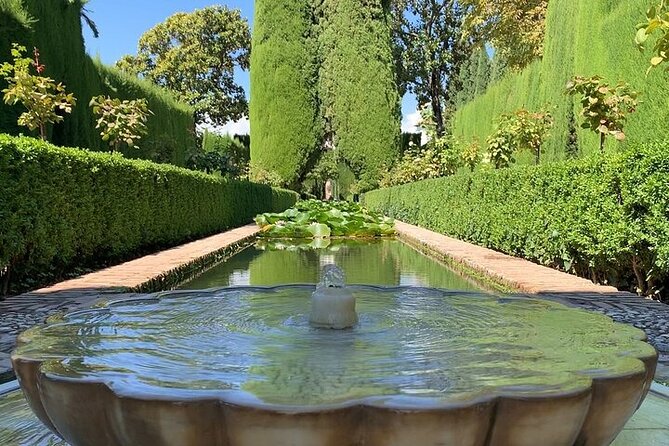
The Generalife was not simply a decorative park. Its gardens, water channels, shade, and productive land supported royal leisure and daily life. The Patio de la Acequia is especially important because its long water channel shows how the Nasrid builders made irrigation both useful and beautiful. The water is part of the garden’s design, but it also points to the engineering that made the palace complex possible.
The route includes the Patio de Polo and Patio de la Guardia before continuing through the Generalife Palace. You will hear how the palace was physically connected with the main Alhambra city. That connection helps explain why the Generalife feels separate while still belonging to the same royal world.
The Patio de la Sultana includes a cypress and taller garden areas. The route leaves the enclosure along the Paseo de las Adelfas, a fitting end to a visit that moves from royal ceremony and fortress walls toward plants, shade, and water.
The Generalife portion lasts about 45 minutes. It is a good length for seeing the main courtyards without turning the whole visit into a garden tour. If gardens are your main reason for visiting Granada, you may still want additional time beyond this guided route.
What the guide adds to the experience
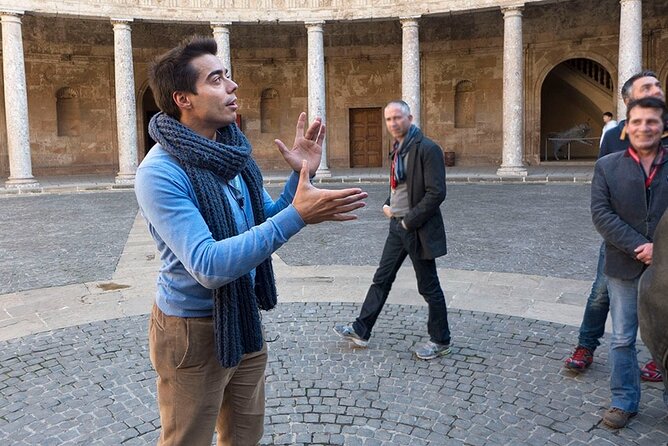
The strongest part of this experience is not simply getting through the entrance gates. It is having someone explain what you are looking at before the next room arrives.
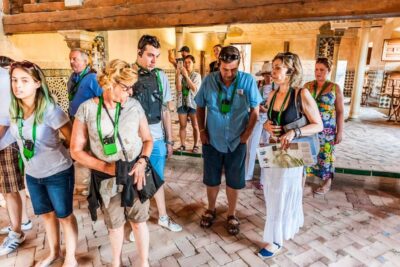
Guide names connected with this experience include Noelia and Victoria. Their presentations have been praised for being clear, attentive, engaging, and easy to follow. That is useful here because the Alhambra can overwhelm you with decoration. Without context, you may remember the pool and the lion fountain but miss why the spaces were arranged as they were.
A good explanation can also keep the tour moving. The visit covers five distinct areas, and the guide has to balance dates, architecture, royal life, water systems, and Christian changes. You should expect a focused presentation rather than a leisurely scholarly lecture.
The group size can reach 30 people. That keeps the cost below a private tour, but you should stay close enough to hear. The English-language option is the one specified for this experience, so confirm that suits your needs before booking.
Is $66.42 a fair price?
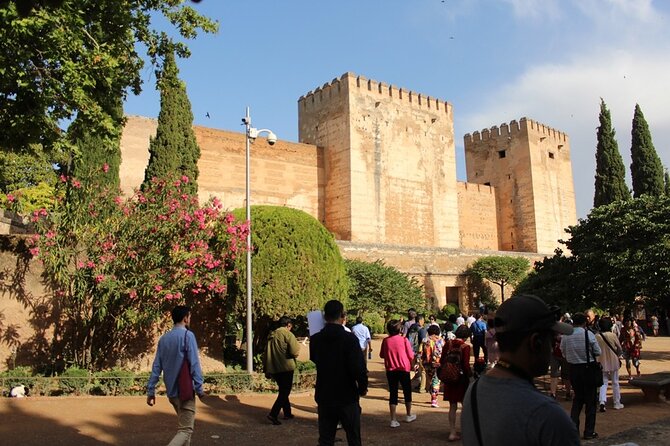
At $66.42 per person, this is not a budget entrance ticket. You are paying for admission to several major areas plus a guided route through the Alhambra, Nasrid Palaces, Alcazaba, Palace of Charles V, Calle Real, and Generalife.
I think the price can make sense if you want structure and interpretation. The Nasrid Palaces are the part where timing and access matter most, and a guide helps you use the limited three-hour window well. You also avoid spending your visit trying to work out which buildings belong to which period.
The value is less clear if you prefer to move slowly, read every panel, or return to favorite courtyards. A self-guided visit may suit you better if flexibility matters more than commentary. This tour is built for a broad, efficient overview.
The high rating of 4.9 from 169 ratings and the 98 percent recommendation figure suggest that the experience usually delivers well. Still, one practical warning deserves attention: a scheduled tour time was changed the day before in one case, forcing the customer to cancel and book elsewhere. That appears to be unusual, but it shows why you should avoid placing the tour immediately before an important departure.
Meeting point, walking demands, and booking rules
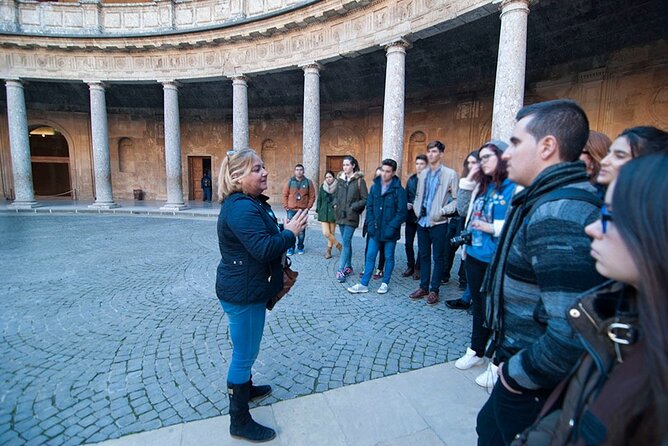
The meeting point is the Alhambra Meeting Point at the souvenir shop and Alhambra Tours, at Paseo de la Sabica 1 in Granada. The ticket redemption point is also listed at Paseo de la Sabica 1.
The activity ends at a different location within the Alhambra area. Check the final meeting instructions carefully so you know where you will finish. The route includes hills, stairs, and uneven surfaces, and it is not recommended for people with reduced mobility.
Most people can take part, and service animals are allowed. The site is near public transportation. Confirmation is normally sent at booking, although bookings made within two days of the visit may receive confirmation within 48 hours, subject to availability.
This experience is non-refundable and cannot be changed for any reason. That rule makes date selection important. I would not book it until your Granada plans are firm.
Who should book this Alhambra tour?
I would choose this tour if you are visiting Granada for the first time, want the major sections covered in one sitting, and prefer clear explanations over wandering on your own. It also suits anyone who wants the Nasrid Palaces, fortress, Renaissance palace, working city, and Generalife in one connected story.
It is a good match for architecture fans, garden lovers, and people who want to understand the mix of Muslim and Christian influence at the Alhambra. The guide’s focus on stucco, wood ceilings, water, courtyards, and later changes gives you plenty to notice.
I would think twice if you have reduced mobility, dislike fixed schedules, or want a slow photographic visit. The group may reach 30 people, and the route covers a lot of ground in three hours.
Should you book it?
Book this guided visit if you want a well-rounded Alhambra introduction with admission included and an English-speaking guide to connect the details. The Nasrid Palaces, Torre de la Vela views, Palace of Charles V, working Medina, and Generalife gardens make the route unusually complete for its length.
Skip it in favor of a more flexible option if you need a slower pace or cannot commit to a non-refundable booking. For most first visits, though, the combination of major sights and strong guide feedback makes $66.42 a reasonable price for three concentrated hours in Granada’s most important monument.
FAQ
How long does the guided Alhambra visit last?
The visit lasts approximately three hours.
In which language is the tour offered?
The tour is offered in English.
What parts of the Alhambra are included?
The route includes the Nasrid Palaces, Alcazaba, Palace of Charles V, Calle Real de la Alhambra, and Generalife.
Is admission included?
Admission is included for the Nasrid Palaces, Alcazaba, Palace of Charles V, and Generalife. The Calle Real portion lists no additional admission fee.
Where does the tour start?
The tour starts at the Alhambra Meeting Point, at Tienda de Souvenirs y Alhambra Tours, Paseo de la Sabica 1, Local, Centro, 18009 Granada, Spain.
Does the tour end at the same place?
No. The activity ends at a different location, with the ending details provided separately.
How many people can join the tour?
The group can include a maximum of 30 people.
Is the tour suitable for people with reduced mobility?
It is not recommended for people with reduced mobility.
Can I cancel or change the booking?
No. The experience is non-refundable and cannot be changed for any reason.
More Alhambra Tours and Tickets
- Granada: Alhambra Entry Ticket with Audio Guide
★ 4.1 · 5,950 reviews - Fast-Track Alhambra & Nasrid Palaces Guided Tour
★ 4.7 · 4,379 reviews - Granada: Alhambra Ticket and Guided Tour with Nasrid Palaces
★ 4.7 · 3,496 reviews - Granada: Alhambra Complex Guided Tour Options
★ 4.6 · 2,899 reviews
Just added around Granada
- Granada: Alhambra tickets and other attractions★ 5.0 · 3 reviews
- Antequera and Torcal from Granada in a small group up to 7 people★ 4.5 · 3 reviews
- Granada Private Tapas & Walking Tour★ 4.5 · 3 reviews
- Albaicin and Sacromonte Private Tour★ 4.5 · 3 reviews
- Complete Private Tour of Alhambra with Nasrid Palaces★ 4.5 · 3 reviews
- Sierra Nevada Small Group BIKE Tour★ 5.0 · 3 reviews
- Private Tour of the Alhambra★ 5.0 · 3 reviews
- Granada: Guided Albaicín Visit with Pets★ 5.0 · 3 reviews
Nasrid Palaces Tours, compared.

Alhambra & Gardens Tour w/Nasrid Palaces Option
Read our review →
Fast-Track Alhambra & Nasrid Palaces Guided Tour
Read our review →
Alhambra Ticket and Guided Tour with Nasrid Palaces
Read our review →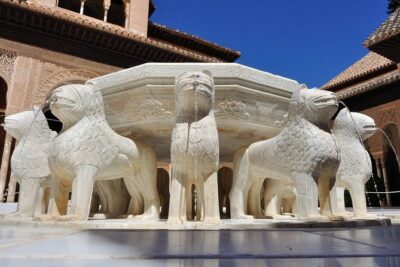
Alhambra & Generalife Skip the line Small Group including Nasrid Palaces
Read our review →
Alhambra Guided Tour with Nasrid Palaces & Gardens
Read our review →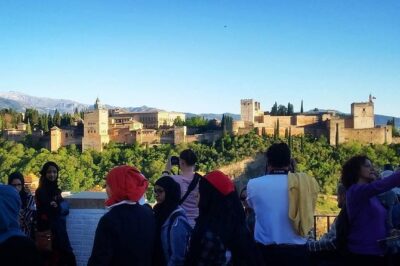
Alhambra &Charles Palace Guided Tour with Optional Nasrid Palaces
Read our review →Browse the lists this tour appears in