
Reviewed · GRANADA ATTRACTION TICKETS
Granada: Moorish Monuments Entrance Tickets
Granada’s Moorish past is not confined to the Alhambra. This ticket takes you to five smaller monuments, including a finely preserved Arab bathhouse, an old traders’ market, and the former residence of a Nasrid sultan. I like the freedom to visit each place at my own pace, and I like that the ticket leads you into parts of the city many people miss.
The price is modest at $14, especially if you visit all five sites. The catch is that the ticket is self-guided, with no tour leader or audio guide included, and several locations have little written information. You will get more from the day if you enjoy looking closely and supplying some of the story yourself.
In This Review
- Key points at a glance
- Five Moorish monuments beyond the Alhambra
- El Bañuelo shows Granada’s bathing culture
- Corral del Carbón connects trade and travel
- Maristán adds a medical chapter
- Casa Morisca reveals a more private side
- Dar al-Horra Palace brings you back to royal Granada
- The walking plan matters more than the ticket price
- What the self-guided format really means
- Who should buy this Granada monument ticket?
- My verdict on the five-site pass
- FAQ
- How much does the Granada Moorish monuments ticket cost?
- How long is the ticket valid?
- Which monuments are included?
- Can I visit the monuments in any order?
- Is a tour guide included?
- Is an audio guide included?
- Where is the meeting point?
- Is admission free on Sundays?
- What should I bring?
- How many children can be included in one adult booking?
Key points at a glance
- Five Moorish sites in one ticket: Visit El Bañuelo, Corral del Carbón, Maristán, Casa Morisca, and Dar al-Horra Palace.
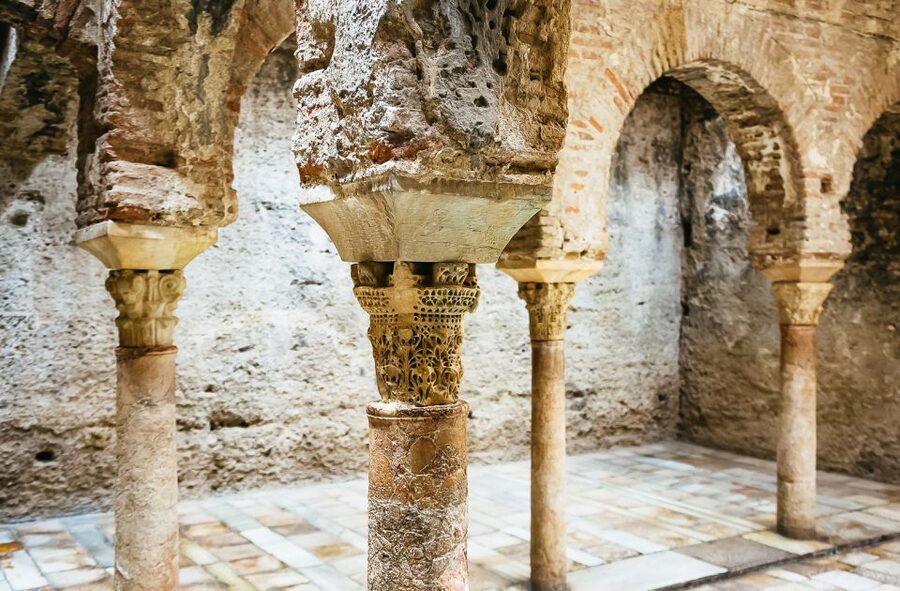
- El Bañuelo is the star stop: See one of the best-preserved Arab bathhouses in the region, with its atmospheric chambers and distinctive architecture.
- You choose the route: The sites can be visited in any order, but they are spread around Granada and require a good walk between them.
- A good way to see lesser-known Granada: The ticket reaches beyond the Alhambra and into the city’s everyday Moorish past.
- Bring your own context: There is no guide or audio guide included, and limited signage can make some stops feel bare.
- Sunday changes the value: Admission to all the monuments is free on Sundays, so paying $14 makes more sense on another day.
Five Moorish monuments beyond the Alhambra
This is not a guided tour with a fixed departure and a leader waiting at a meeting point. You receive admission to five sites and make your own way to each one. That format works well for me when I want to pause, take photographs, or fit the monuments around another day in Granada.
The sites are tied to different parts of Moorish life. You see bathing, trade, food storage, medical care, domestic life, and royal residence. That range gives the ticket more purpose than a simple collection of old buildings.
The monuments are located in and around the historic center and Albaicín area. You can visit them in any order, but you should treat the day as a walking route rather than five quick indoor stops. One particularly useful tip is to allow plenty of time for the distances between places. The ticket is valid for one day only, so do not spread the visits across your stay.
More entry tickets and combo passes:
- Granada: Alhambra & Nasrid Palaces Tour with Tickets
★ 4.7 · 19,801 reviews - Granada: Alhambra and Nasrid Palaces Entry Ticket
★ 4.6 · 15,130 reviews - Granada: Alhambra Entry Ticket with Audio Guide
★ 4.1 · 5,950 reviews
El Bañuelo shows Granada’s bathing culture
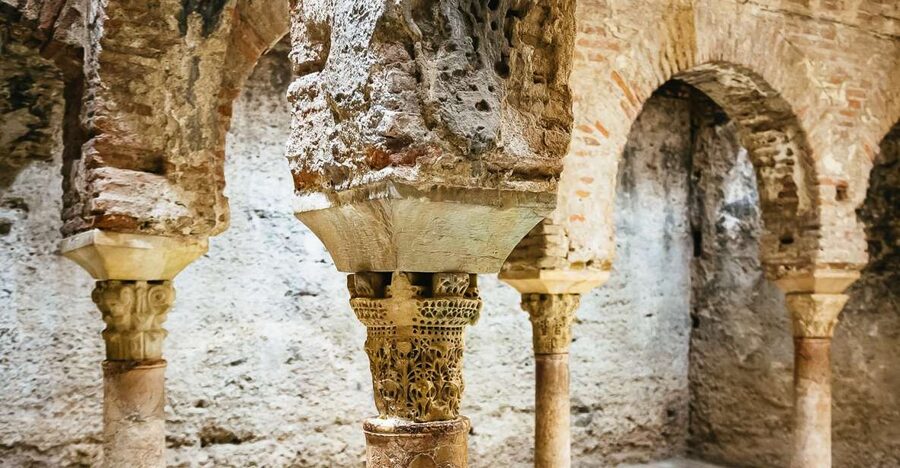
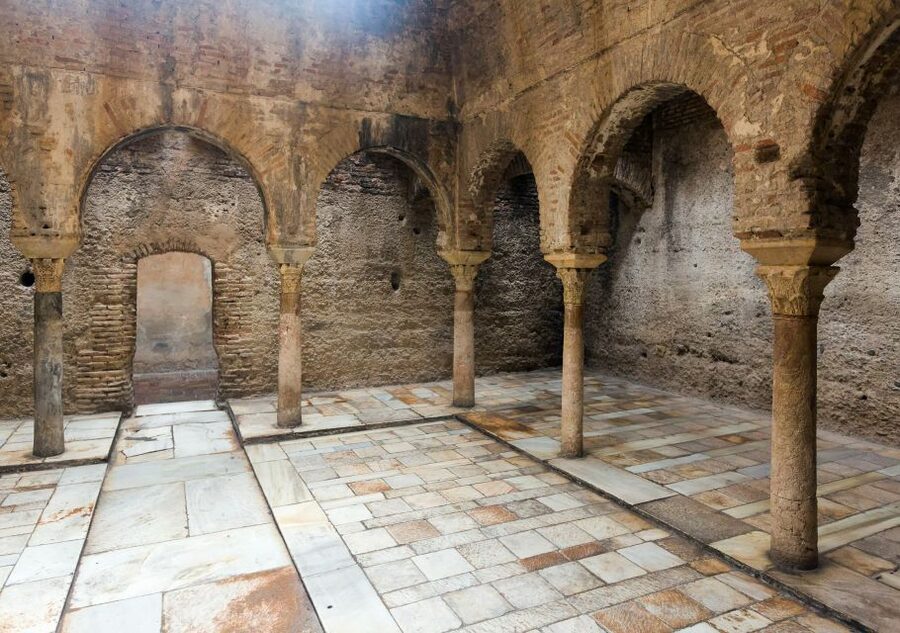
Start with El Bañuelo if you want the most atmospheric introduction. This is one of the best-preserved Arab bathhouses in the region, and its sequence of chambers helps you picture how public bathing worked during the Moorish period.
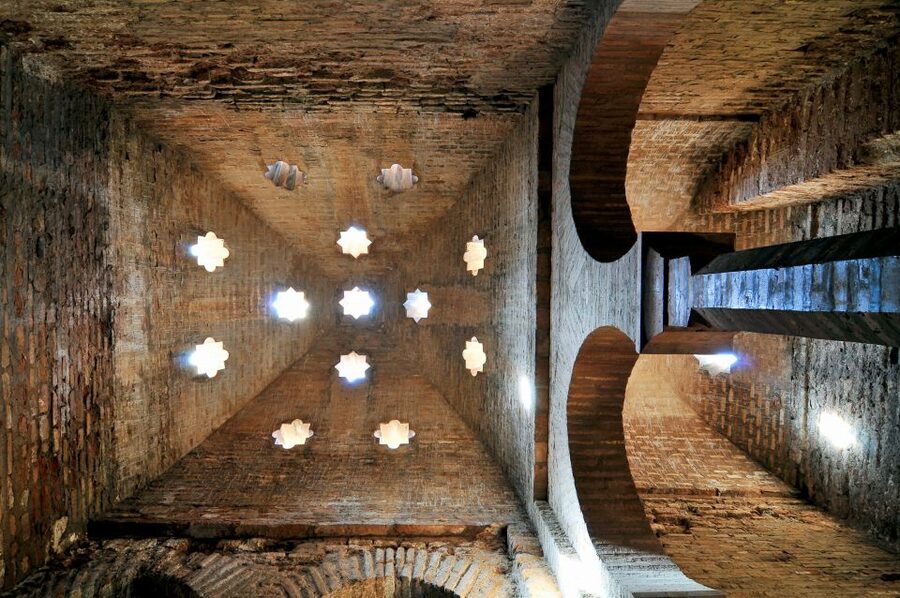
Inside, look up as well as around. The bathhouse architecture is known for its repeated arches and ceiling openings, which let in small patches of light and helped with ventilation. The rooms are the main attraction here, not a large collection of objects.
I would give El Bañuelo extra time because it rewards careful looking. You can move through the bathing areas and consider how the building was used for ritual and physical washing. The main weakness is the lack of detailed explanation. If you want every room clearly identified and explained, the self-guided format may feel thin.
Still, this is the stop most likely to make the history feel physical. The stone, shadows, and compact rooms offer a clearer sense of daily life than a palace room emptied of its furnishings.
Corral del Carbón connects trade and travel
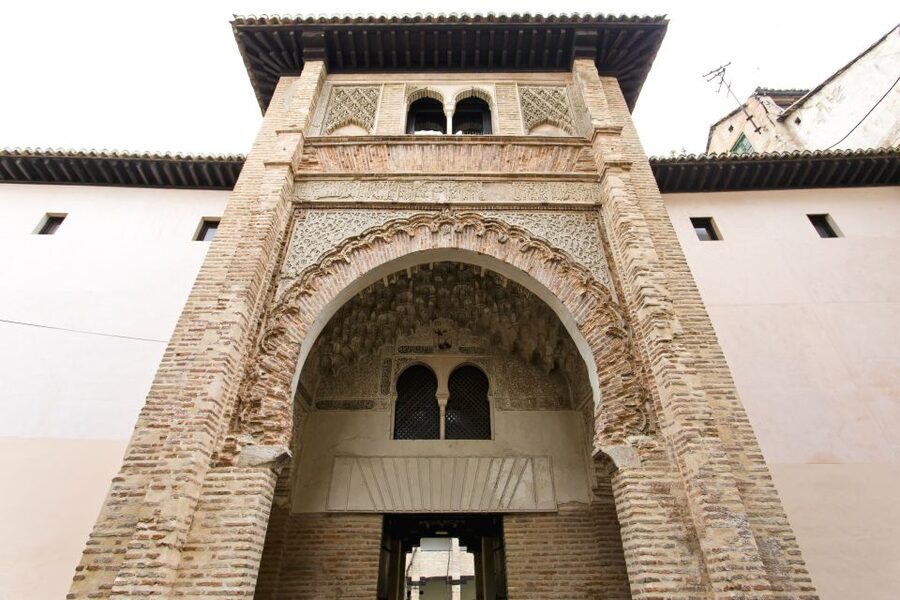
Corral del Carbón offers a different view of medieval Granada. Rather than royal life or religious practice, it points to commerce. The building served as a traders’ market, grain depot, warehouse, and hostel for people passing through the city.
The entrance facade deserves a close look. Pass through the gateway slowly and study the architectural details before moving farther inside. This was a practical building, but its entry gives it a formal presence.
The site helps you understand how goods and people moved through Granada. Merchants needed places to store grain, conduct business, and spend the night. That makes Corral del Carbón a useful counterpoint to the more polished image of Moorish Granada associated with palaces and gardens.
You may find the visit brief, depending on how much information is available when you arrive. There is no guide included, so I would read a little about the building beforehand if trade and urban life interest you. Even without a long visit, the setting gives you a valuable glimpse of the city as a working commercial center.
Maristán adds a medical chapter
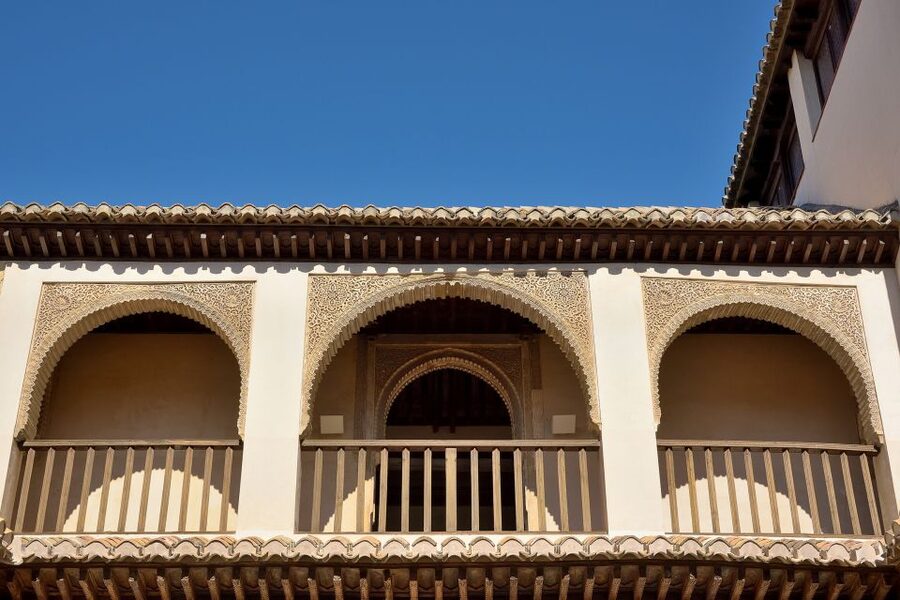
Maristán was founded as a hospital by Sultan Muhammad V in the 14th century. Its presence in the ticket matters because it broadens the story beyond monuments built for rulers, merchants, or private families.
The building is connected with care and medicine, though the experience can feel more restrained than El Bañuelo or Dar al-Horra Palace. You should not expect a fully furnished hospital or a large display explaining medieval treatment. The appeal comes mainly from the building’s purpose and its place in Granada’s social history.
I would approach Maristán as a short, thoughtful stop. Look at the structure, consider the hospital’s role, and take in the fact that organized care formed part of the city’s public life. If you prefer dramatic interiors, this may feel like the least rewarding visit in the group.
That said, its inclusion is one of the ticket’s strengths. A collection focused only on palaces would give you a narrow view of Moorish Granada. Maristán reminds you that the city also needed hospitals and public institutions.
A different sort of day out in Granada:
- Granada: Alhambra & Generalife Fast-Track Guided Tour
★ 4.7 · 8,313 reviews - Granada: Alhambra & Gardens Tour w/Nasrid Palaces Option
★ 4.5 · 6,437 reviews - Granada: Flamenco Show in La Alboreá
★ 4.7 · 5,423 reviews - Fast-Track Alhambra & Nasrid Palaces Guided Tour
★ 4.7 · 4,379 reviews
Casa Morisca reveals a more private side
Casa Morisca de Horno de Oro is a well-preserved Moorish house on Horno de Oro Street. After the larger civic and royal buildings, this stop shifts your attention to domestic architecture.
The house is valuable because it suggests how people lived in a smaller private setting. You can study the rooms, proportions, and relationship between the interior and the surrounding city. The house also has views toward the Alhambra, adding a strong visual link between ordinary domestic space and the famous palace complex.
Do not expect a grand residence on the scale of the Alhambra. That is exactly the point. Casa Morisca gives you a quieter look at residential life and helps you notice details that can disappear in a larger monument.
The drawback is that the house may not offer enough explanation for visitors who want a detailed interpretation of each room. I would take my time, look at the architectural layout, and treat the building as a place to observe rather than a museum with a full narrative.
Dar al-Horra Palace brings you back to royal Granada
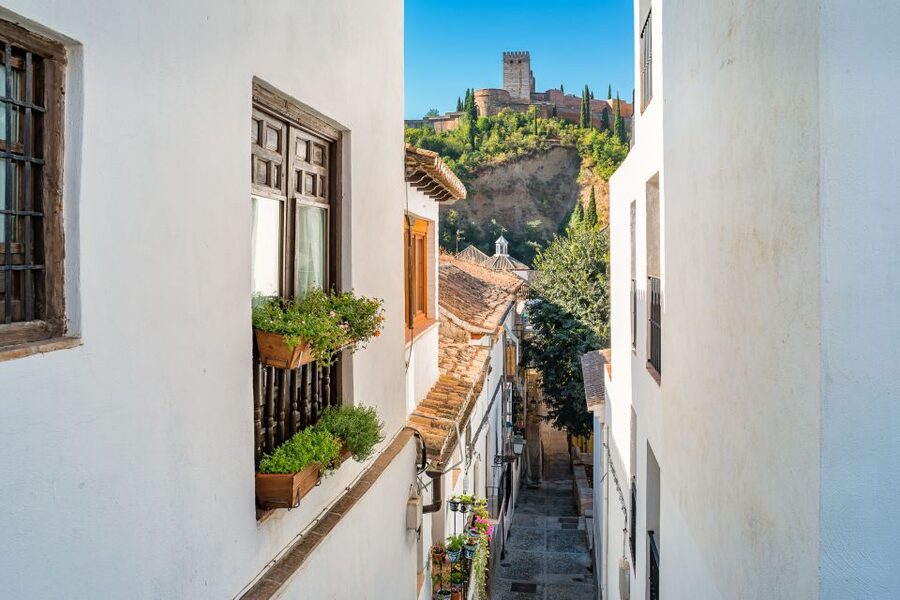
Dar al-Horra Palace is the most overtly royal stop in this group. It was a Nasrid palace and former residence of a sultan, so you get a chance to walk through rooms once connected with Granada’s ruling family.
The palace is smaller in scale than the Alhambra, but that makes it easier to focus on individual spaces. Notice the rooms, arches, courtyards, and views rather than expecting the vast sequence of palaces found at the main complex.
For me, Dar al-Horra works best near the end of the day. After seeing the bathhouse, market, hospital, and private house, you arrive with a broader idea of the city. The palace then becomes one part of a larger urban story, not the only thing worth seeing.
As with the other stops, the self-guided setup affects the visit. Without an included guide or audio commentary, you will need to bring your own background information. The setting remains worthwhile, but the experience depends more on your curiosity than on interpretation provided at the site.
The walking plan matters more than the ticket price
At $14 per person, this is a reasonably priced way to enter five historic sites. The value is strongest if you visit every monument and enjoy walking through Granada’s old neighborhoods between stops.
The price is less attractive if you only see two or three locations. Since the ticket expires at the end of the same day, you should plan your route before setting out. You can visit the sites in any order, but that freedom does not remove the need to manage your time.
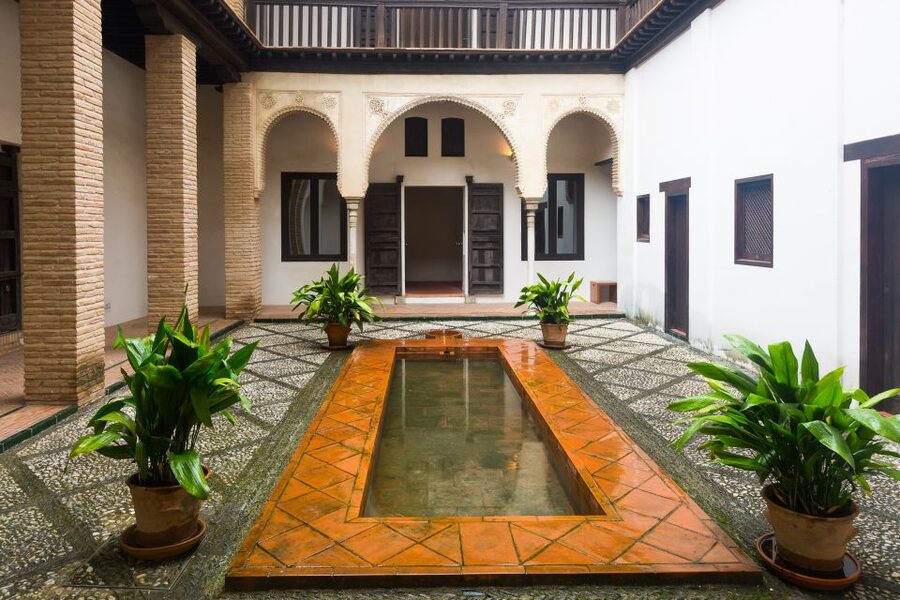
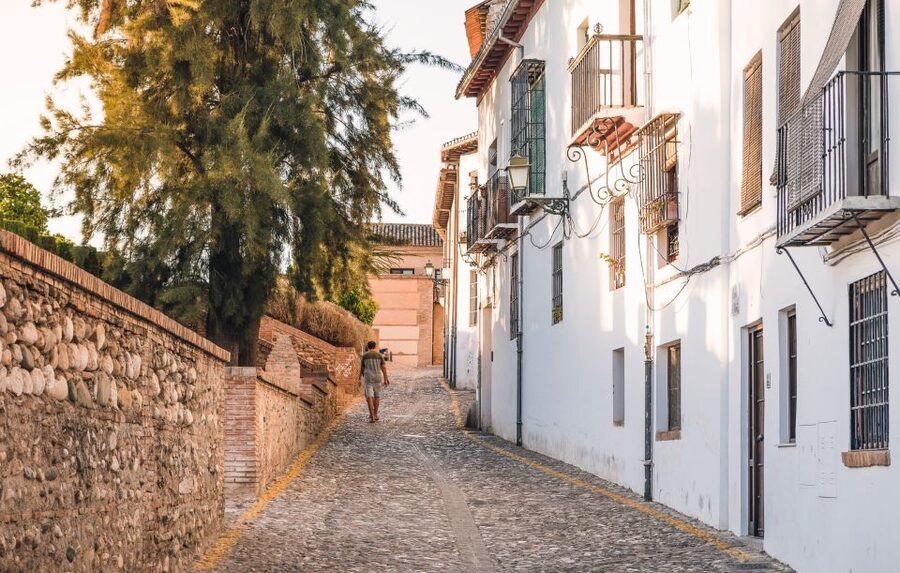
The narrow cobblestoned streets of Albaicín are part of the appeal. You get the atmosphere of the old neighborhood as you move from one place to another, rather than being carried from door to door. At the same time, cobblestones and uphill streets can make the day tiring, so comfortable shoes are a sensible choice.
There is no shared meeting point. You make your own way to each monument, which gives you control but also puts the navigation work on you. If you prefer a tour leader who gathers the group, explains the route, and keeps the day moving, this ticket will feel too independent.
What the self-guided format really means
The ticket includes entry but not a tour guide or audio guide. That distinction is important. You receive access to the monuments, but you should not expect a person to explain the function of each room or connect the sites into one clear story.
Limited signage can be a real issue. Some places may leave you wondering what you are looking at or why a room matters. Audio-guide QR codes may not always work, so I would not rely on them as your only source of information.
You can still have a good visit if you enjoy forming your own impressions. El Bañuelo’s chambers, Corral del Carbón’s gateway, and Dar al-Horra’s rooms communicate something through their structure alone. But if you want historical detail, prepare before you go or use a reliable guidebook while walking around.
This is also why the ticket receives mixed value. The admission is inexpensive, and the monuments are significant. The experience itself is less polished than a guided tour. You pay for access, not interpretation.
Who should buy this Granada monument ticket?
I would recommend it to independent visitors who want more than the Alhambra and who are happy to explore at their own speed. It suits people who enjoy old buildings, urban walks, and small sites where they can stop without being rushed.
It is also a good choice for repeat visitors to Granada. If you have already seen the major palace complex, these monuments help fill out your picture of the city’s Moorish period. Families can use the flexible order to build in breaks, though the walking and limited signage may test younger children.
History-minded visitors should get the most from the range of sites. You see a bathhouse, market, warehouse, hostel, hospital, house, and palace in a single day. That is a useful cross-section of city life.
I would hesitate to recommend it to anyone who wants a fully explained tour. You may leave Maristán or Casa Morisca wishing someone had provided more background. The experience is also a poor deal on Sunday, when admission to all the monuments is free.
Bring your passport or ID card, even though the visit is self-guided. You will also need to organize your own route and make sure you enter all five sites on the same day. Bookings allow a maximum of three children per adult booking, so larger groups with more than three children must make separate bookings.
My verdict on the five-site pass
Book this ticket if you want a low-cost, flexible walking day focused on Granada’s lesser-known Moorish monuments. El Bañuelo and Dar al-Horra Palace provide the strongest architectural appeal, while Corral del Carbón, Maristán, and Casa Morisca add useful context about trade, health, and home life.
Skip it if you are visiting on a Sunday, since the same admissions are free then. I would also skip it if you want a guide, a working audio tour, or a tightly organized route. For everyone else, $14 is fair, provided you commit to seeing all five sites and bring enough curiosity to fill in the gaps.
FAQ
How much does the Granada Moorish monuments ticket cost?
The ticket costs $14 per person.
How long is the ticket valid?
The ticket is valid for one day. You must visit all the included monuments on the same day.
Which monuments are included?
Entry is included to Corral del Carbón, El Bañuelo, Casa Morisca on Horno de Oro Street, Dar al-Horra Palace, and Maristán.
Can I visit the monuments in any order?
Yes. You make your own way to each site and can visit the monuments in any order.
Is a tour guide included?
No. The experience is self-guided, and a tour guide is not included.
Is an audio guide included?
No. An audio guide is not included. Information at some sites may also be limited.
Where is the meeting point?
There is no single meeting point. You must make your own way to each monument.
Is admission free on Sundays?
Yes. Admission to all of the included monuments is free on Sundays.
What should I bring?
Bring your passport or ID card.
How many children can be included in one adult booking?
A maximum of three children is allowed for every adult booking. Bookings with more than three children must be made separately.
Just added around Granada
- Granada: Alhambra tickets and other attractions★ 5.0 · 3 reviews
- Antequera and Torcal from Granada in a small group up to 7 people★ 4.5 · 3 reviews
- Granada Private Tapas & Walking Tour★ 4.5 · 3 reviews
- Albaicin and Sacromonte Private Tour★ 4.5 · 3 reviews
- Complete Private Tour of Alhambra with Nasrid Palaces★ 4.5 · 3 reviews
- Sierra Nevada Small Group BIKE Tour★ 5.0 · 3 reviews
- Private Tour of the Alhambra★ 5.0 · 3 reviews
- Granada: Guided Albaicín Visit with Pets★ 5.0 · 3 reviews
Granada Attraction Tickets, compared.
Alhambra Ticket and Guided Tour with Nasrid Palaces
Read our review →

Alhambra and Generalife Garden Ticket & Guided Tour
Read our review →
Alhambra: Small Group Tour with Local Guide & Admission
Read our review →
Alhambra and Nasrid Palaces Guided Tour with Tickets
Read our review →Browse the lists this tour appears in