
Reviewed · GRANADA GEOPARK & GUADIX TOURS
Granada Geopark: Stargazing Tour with Telescope
The best part of this Granada-area outing is its setting: you watch the stars from an open site in Sierra Nevada, nearly 1,800 meters above sea level, well away from city lights. The guide first maps the sky with an astronomical laser, then turns the telescope toward the night’s most interesting targets.
I like the clear two-part format, which helps you understand what you are seeing instead of simply peering through an eyepiece. I also like the chance to photograph the Moon through the telescope with your own phone when conditions allow. The main drawback is the mountain cold. Bring serious warm layers, even in summer, because the temperature can fall sharply after dark.
- High-altitude viewing: The open site near Mirador del Marquesado is far from urban light.
- Laser-led sky lesson: Learn the main stars, constellations, myths, and basic night-sky orientation.
- Professional telescope: View planets, moons, galaxies, nebulae, and star clusters when the sky is clear.
- Two-hour format: The session has enough time for both explanation and telescope viewing without becoming an all-night commitment.
- Personal Moon photo: Use your own phone to try a telescope image when the Moon is visible and conditions cooperate.
- Helpful guide style: Leo is specifically praised for explaining astronomy clearly and making the telescope viewing memorable.
In This Review
- Why Sierra Nevada Makes the Night Sky Worth the Trip
- Starting at Mirador del Marquesado
- Part One: Drawing the Celestial Sphere With a Laser
- Part Two: From Stars to Galaxies Through the Telescope
- What the Two-Hour Timing Gives You
- The Cold Is the Practical Issue
- Is $28 a Good Price?
- Who Will Enjoy This Most
- What Makes the Guide Important
- Book This Tour or Keep Looking?
- FAQ
- Where does the Granada Geopark stargazing tour begin?
- How long does the stargazing activity last?
- What languages does the guide speak?
- What will I learn during the first part?
- What can I see through the telescope?
- Can I take a photo through the telescope?
- Is the activity held in a dark location?
- What should I bring?
- Is the activity wheelchair accessible?
Why Sierra Nevada Makes the Night Sky Worth the Trip
This is not a city observatory with a roof, exhibits, and a gift shop. It is a simple outdoor astronomy session in the National Park of Sierra Nevada, at an accessible viewpoint near Mirador del Marquesado.
That location matters. Granada’s city lights can wash out faint stars and make subtle details harder to see. At nearly 1,800 meters, the tour gets you away from much of that glow. The open setting also gives you a broad view of the sky, which is useful when the guide is pointing out constellations with the laser.
You should keep your expectations sensible. A dark site improves visibility, but astronomy still depends on clear skies and the objects visible on that particular night. The telescope can reveal a range of targets, but no guide can promise every planet, galaxy, or nebula at every session.
I like that the experience treats the sky as something you can learn to read. You are not only shown a bright object and sent back to the hotel. You learn how the stars relate to their constellations and how people have used them for stories and orientation.
Starting at Mirador del Marquesado
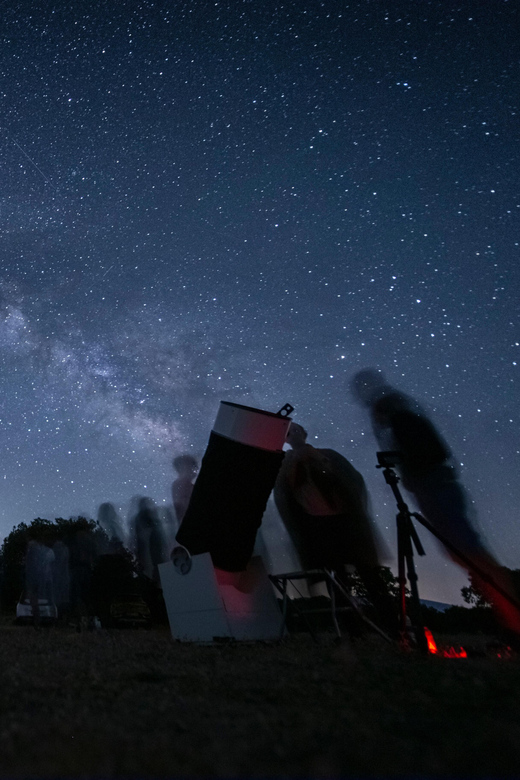
The tour begins and ends at Mirador del Marquesado. The supplied details describe the spot as an open, accessible location, and the activity is wheelchair accessible.
That makes the meeting point simpler than a long walk into the mountains. Still, you are outdoors at altitude after sunset, so accessibility does not mean warmth or shelter. Wear shoes and clothing suitable for standing outside, and bring more insulation than you think you need.
The meeting point also shapes the mood. This is a quiet, sky-focused stop rather than a packed sightseeing attraction. Your attention moves quickly from the ground to the stars, with the surrounding darkness doing much of the work.
Check the starting time when you book. The exact hour changes with availability and the season, and a night-sky activity naturally begins after dark. The full session lasts two hours, with a return to the same viewpoint afterward.
More Geopark badlands and Guadix trips:
- Granada: End of the World Viewpoints 4×4 Tour in the Geopark
★ 4.8 · 19 reviews - Gorafe: Los Coloraos Desert 4×4 Tour
★ 5.0 · 16 reviews - Guadix: Cathedral of Guadix Entry Ticket
★ 4.8 · 9 reviews
Part One: Drawing the Celestial Sphere With a Laser
The first part uses an astronomical laser to introduce the celestial sphere. That phrase can sound technical, but the practical idea is straightforward: the guide helps you understand how the sky appears to curve above you and how the stars seem to move across it.
You begin by learning the main stars and the constellations connected to them. The guide also explains their myths, giving the patterns a memorable human story instead of leaving you with a jumble of bright points.
This is where the tour earns its educational value. A telescope can show you a distant object, but knowing where to look gives you a better sense of the sky as a whole. You may leave able to recognize some of the main patterns on your own, though the experience is not presented as a formal astronomy course.
The guide also discusses orientation using the stars. That makes the session useful for beginners who often find the night sky confusing. The laser provides a visible line from the guide’s explanation to the actual stars overhead, which is easier to follow than a spoken description alone.
If Leo leads your session, expect a guide who explains the subject in a clear, approachable way. His teaching is the strongest personal detail attached to this experience, and the specific praise focuses on how well he explains the material before handing you the telescope.
Part Two: From Stars to Galaxies Through the Telescope
The second part shifts from the broad sky to individual objects. The professional telescope is used to show the most prominent sights available that night, with the possible targets ranging from stars, planets, and moons to galaxies, nebulae, and star clusters.
That range is important. Many first-time stargazing outings focus only on constellations. Here, the laser lesson gives you the map, and the telescope gives you a closer look at selected points within it.
What you see depends on the night. Planets and the Moon are often easier to recognize than faint galaxies or nebulae, but the activity specifically covers all of these types of objects. The guide chooses from what is visible and worthwhile under the current conditions.
The telescope is described as high quality and professional, with enough power to reveal celestial objects in detail when the sky is clear. You should still expect an individual eyepiece view, not a giant cinema screen. The experience is about taking your turn, looking carefully, and letting the guide explain what appears in front of you.
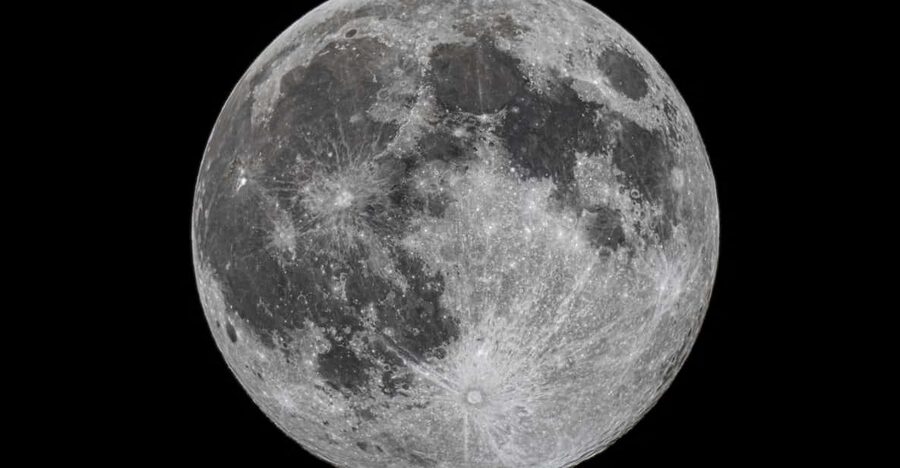
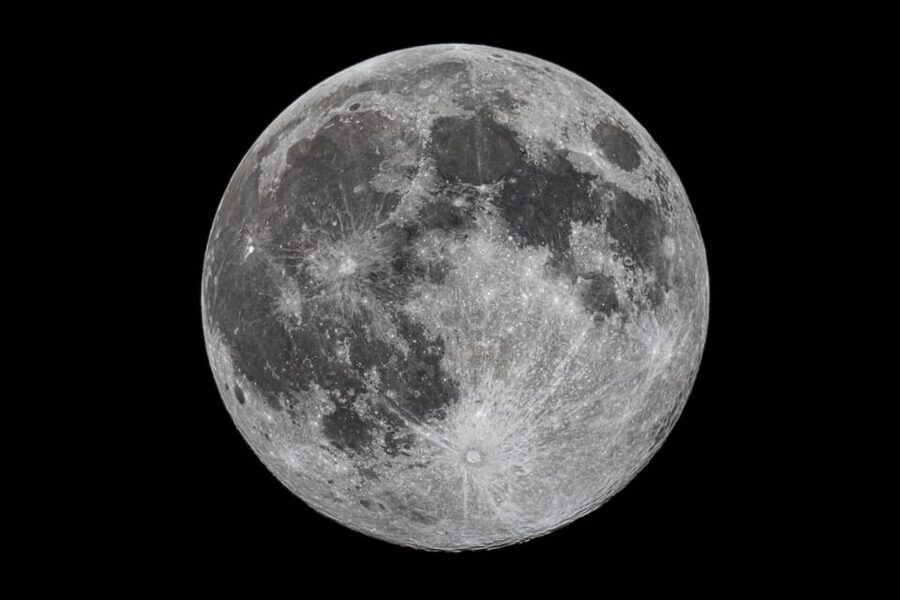
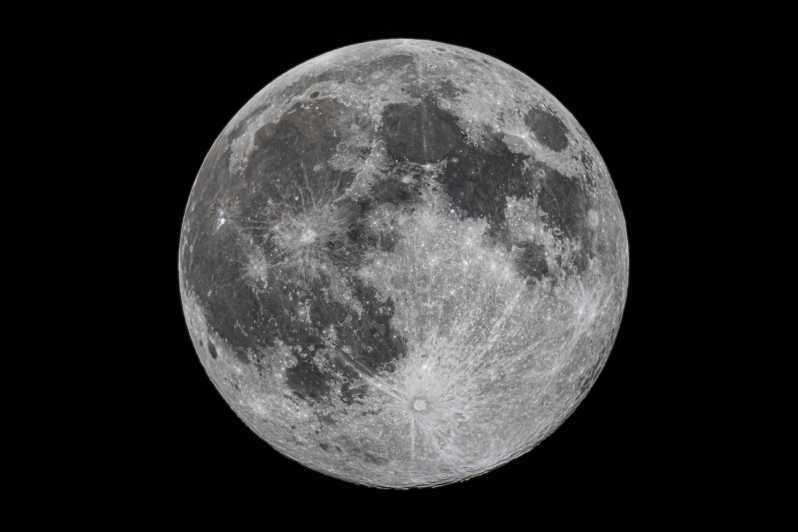
The Moon photo option adds a nice practical touch. When the Moon is visible and the setup permits it, you can hold your own phone to the telescope and try to capture an image. It will not replace a dedicated astronomical photograph, but it gives you a personal record of the evening.
What the Two-Hour Timing Gives You
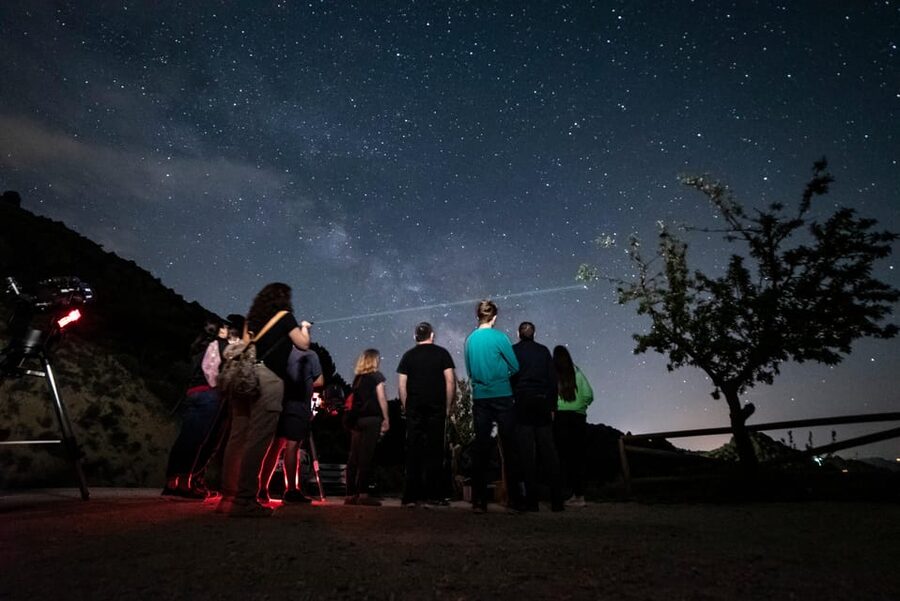
Two hours is a sensible length for this kind of activity. It gives the guide time to explain the constellations and sky movements, then move into telescope observation without asking you to spend the entire night standing outside.
The pace also suits mixed groups. Beginners can ask basic questions and get their bearings, while people with some astronomy experience can pay closer attention to the object selection and orientation lesson.
There is one tradeoff. With only two hours, the guide must select the night’s main sights rather than show everything above you. The session is built around the most prominent objects, not a long list of every visible star and deep-sky target.
That focus is a strength for most people. You are more likely to remember a small set of constellations and objects than a rushed catalogue of names. If you want a highly technical observing session lasting several hours, this shorter format may feel limited.
A different sort of day out in Granada:
- Granada: Alhambra & Nasrid Palaces Tour with Tickets
★ 4.7 · 19,801 reviews - Granada: Alhambra and Nasrid Palaces Entry Ticket
★ 4.6 · 15,130 reviews - Granada: Alhambra & Generalife Fast-Track Guided Tour
★ 4.7 · 8,313 reviews - Granada: Alhambra & Gardens Tour w/Nasrid Palaces Option
★ 4.5 · 6,437 reviews
The Cold Is the Practical Issue
The most important packing advice is also the easiest to ignore: bring warm clothing.
The activity takes place at night in the mountains, and the temperature can drop significantly even during summer. You may spend part of the session standing still while looking through the telescope, which makes the cold more noticeable than it would be during a walk.
Bring layers rather than relying on the daytime forecast in Granada. A warm outer layer is essential, and extra clothing is a wise choice for anyone who tends to feel cold. This is not a small comfort issue. If you are shivering, you will have a harder time following the constellation lesson or enjoying the telescope.
The open setting helps the sky, but it means there is no suggestion of an indoor backup space in the supplied details. Plan this as an outdoor mountain activity from start to finish.
Is $28 a Good Price?
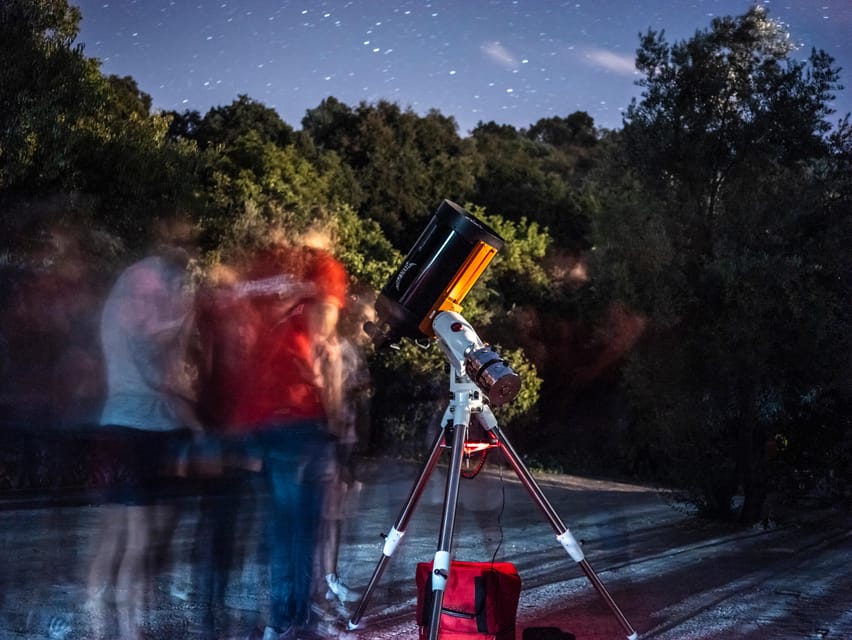
At $28 per person, this is a good-value introduction to astronomy if you want both instruction and equipment. You are paying for a two-hour guided session, an astronomy laser presentation, and access to a professional telescope in a low-light setting.
The value improves if you are new to stargazing. Buying or transporting a suitable telescope would cost far more than this outing, and a beginner may not know which objects to find or how to interpret them. The guide gives you the setting, the equipment, and a clear order for understanding the sky.
The price is less compelling if you only want a quick look at the Moon. The session spends substantial time on constellations, apparent sky movements, orientation, and a range of astronomical objects. It is designed as an educational observation, not a single-object photo stop.
Free cancellation up to 24 hours in advance and the option to reserve now and pay later make the booking less rigid. Those policies are useful here because visibility depends on weather, although you should still check the exact terms and starting time when reserving.
Who Will Enjoy This Most
I would choose this for first-time stargazers, families with older children, couples looking for a quiet evening, and anyone spending time around Granada who wants an activity beyond the city center.
It also suits people who enjoy learning while they look. The guide does not simply point out bright objects. You learn constellation names, myths, star-based orientation, and the apparent movements of the sky before viewing targets through the telescope.
The tour works well for visitors who prefer a short evening commitment. Two hours is long enough to feel like a proper outing but short enough to fit around dinner or another Granada plan, depending on the starting time.
You should think twice if you dislike cold outdoor conditions, want guaranteed views of a particular planet, or expect a private astronomy lesson. The available objects depend on the clear sky and the night’s visibility, and the experience is offered with live guidance in English or Spanish.
The activity is wheelchair accessible, which removes one common barrier. You should still confirm the practical details of the meeting point if you have specific mobility needs, since the session takes place outdoors at a mountain viewpoint.
What Makes the Guide Important
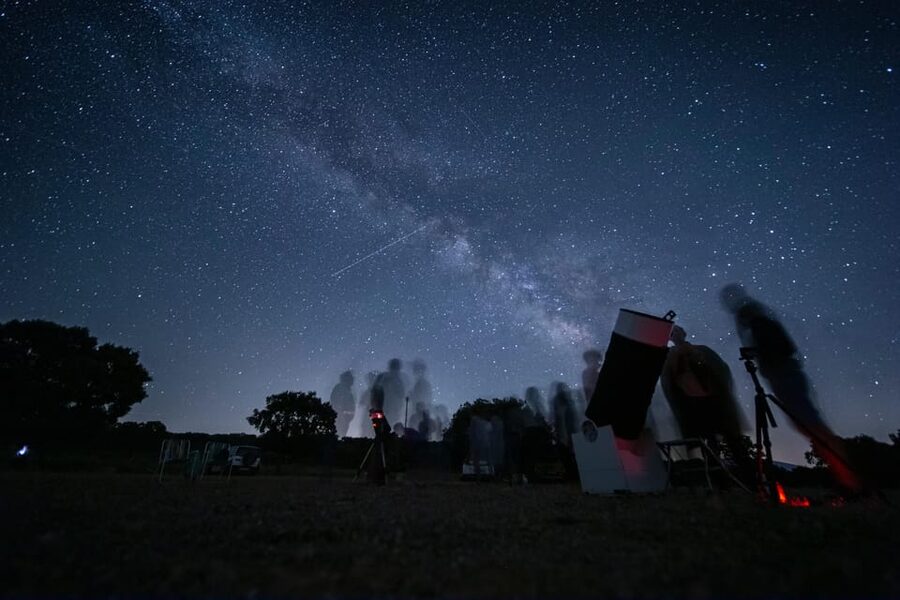
Astronomy is much easier to enjoy when the guide can explain it without burying you in jargon. Leo is the guide specifically associated with this experience, and the useful takeaway is his clear teaching style. He explains the material carefully, then makes the telescope viewing feel like the payoff.
That order matters. If you look through a telescope before understanding the object, a bright blur can remain just that. When you first learn the constellation or the type of object, the view gains context.
The guide also has to manage the limits of the night. Clouds, visibility, and the position of objects can change the plan. A strong guide can adjust the selection while keeping the session focused, and the format gives enough room for that flexibility.
The overall rating is 4.9 from 12 ratings, with particular praise for the explanations and the telescope viewing. That is a small sample, so I would treat it as a positive signal rather than a guarantee. The experience is at its best when the sky is clear and you arrive prepared for the cold.
Book This Tour or Keep Looking?
Book it if you want a well-priced, beginner-friendly astronomy lesson in a genuinely dark mountain setting. The laser-led introduction, clear constellation teaching, and professional telescope give the evening more substance than a simple star-viewing stop.
The strongest reasons to choose it are the remote Sierra Nevada location, the two-part structure, and the chance to see objects beyond the naked-eye stars. The Moon photo opportunity is a pleasant extra, especially for families and phone photographers.
Skip it if you need indoor comfort, a guaranteed object, or a private and highly specialized observing session. For everyone else, pack warm clothes, check the starting time, and let the clear sky decide how much the telescope can show.
FAQ
Where does the Granada Geopark stargazing tour begin?
The tour begins at Mirador del Marquesado and returns to the same location after the two-hour guided session.
How long does the stargazing activity last?
The activity lasts two hours. Starting times vary, so check availability when booking.
What languages does the guide speak?
Live guidance is available in English and Spanish.
What will I learn during the first part?
You will learn to recognize the main stars and constellations, hear their myths, and discuss how the sky appears to move. The guide also explains orientation using the stars.
What can I see through the telescope?
Depending on the night and sky conditions, the telescope may show stars, planets, moons, galaxies, nebulae, and star clusters.
Can I take a photo through the telescope?
When possible, you can use your own phone to photograph the Moon through the telescope. A group photo is also included.
Is the activity held in a dark location?
Yes. The session takes place in an open location in Sierra Nevada, nearly 1,800 meters above sea level and away from urban lights.
What should I bring?
Bring warm clothing. Mountain temperatures can fall sharply at night, even during summer.
Is the activity wheelchair accessible?
Yes, the activity is described as wheelchair accessible.
Just added around Granada
- Granada: Alhambra tickets and other attractions★ 5.0 · 3 reviews
- Antequera and Torcal from Granada in a small group up to 7 people★ 4.5 · 3 reviews
- Granada Private Tapas & Walking Tour★ 4.5 · 3 reviews
- Albaicin and Sacromonte Private Tour★ 4.5 · 3 reviews
- Complete Private Tour of Alhambra with Nasrid Palaces★ 4.5 · 3 reviews
- Sierra Nevada Small Group BIKE Tour★ 5.0 · 3 reviews
- Private Tour of the Alhambra★ 5.0 · 3 reviews
- Granada: Guided Albaicín Visit with Pets★ 5.0 · 3 reviews
Granada Geopark & Guadix Tours, compared.
End of the World Viewpoints 4×4 Tour in the Geopark
Read our review →
Browse the lists this tour appears in