
Reviewed · GRANADA CITY HIGHLIGHTS & VIEWPOINTS
Granada City Train 1 or 2-Day Hop-On Hop-Off Ticket
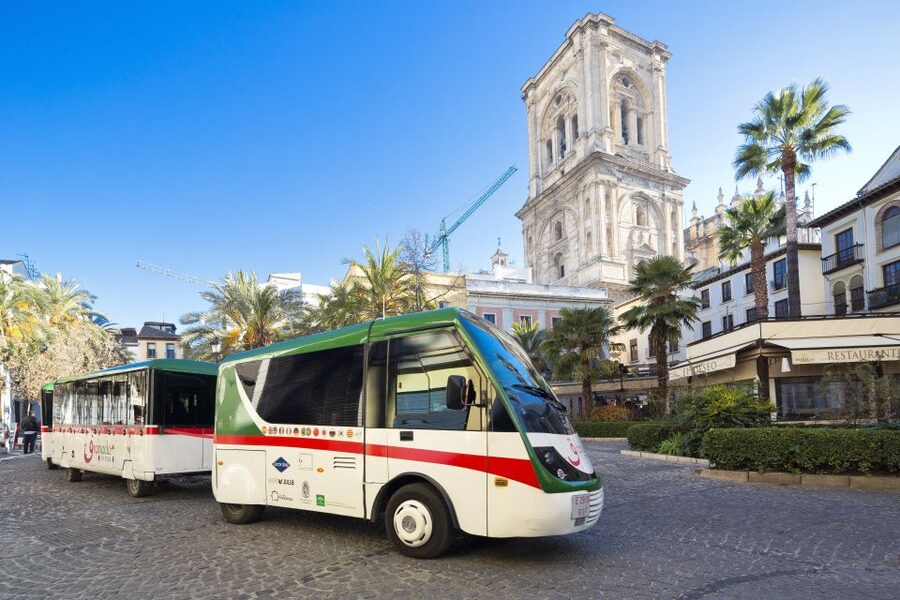
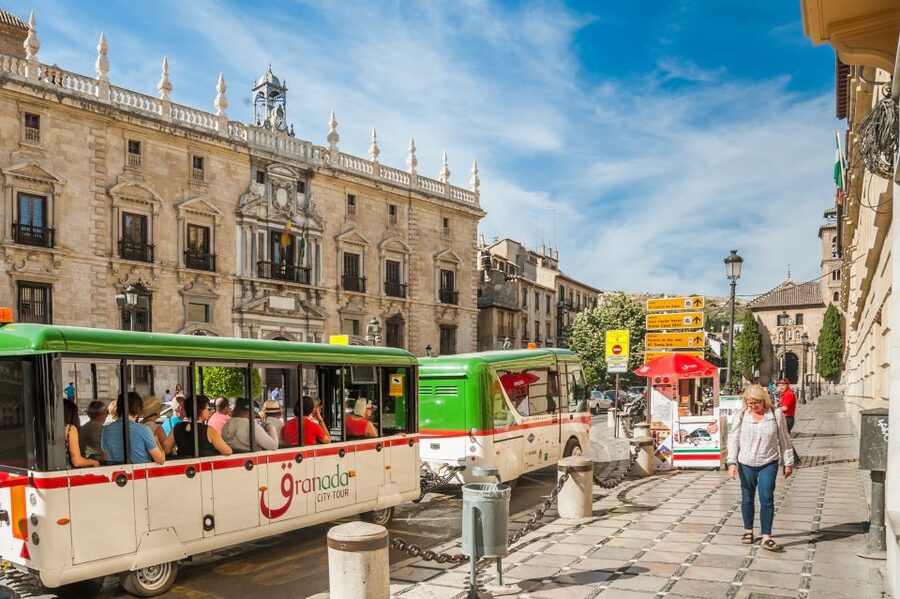
Granada’s little city train is at its best on the steep climb toward the Alhambra. It squeezes through narrow streets, rattles over old cobbles, and gives you a quick look at districts that are tiring to reach on foot. You can take one ride for orientation or use the train as a rolling shuttle for one or two days.
I like the easy access to Plaza Nueva, the cathedral, and the Mirador de San Cristóbal. I also like the price: at about $8 per person, it is a cheap way to save your legs on Granada’s hills. The catch is capacity. Trains can fill up, and a 30 to 45 minute wait is possible at busy times.
In This Review
- Key points to know before you ride
- Why Granada’s city train works so well
- Stop 1: Alhambra Generalife ticket office
- Stop 2: Alhambra and Puerta de la Justicia
- Stop 3: Plaza Nueva
- Stop 4: Alhóndiga
- Stop 5: Catedral and Capilla Real
- Stop 6: Mirador de San Cristóbal and Jardines de Zoraya
- Stop 7: Arco de Elvira and Hospital Real
- Stop 8: Calle Reyes Católicos and Plaza Isabel la Católica
- Stop 9: Calle Molinos and Campo del Príncipe
- Stop 10: Carmen de Los Mártires
- One trip, one day, or two days?
- The audio guide and the ride itself
- Crowds, waiting, and the best way to board
- Is the $8 fare good value?
- Who should book this experience?
- Should you book the Granada City Train?
- FAQ
- Where does the Granada City Train route start?
- How often do the trains run?
- Does the ticket include entry to the Alhambra?
- Which ticket options are available?
- What languages are available for the audio guide?
- Do I need to bring headphones?
- Can I use the train to reach Plaza Nueva?
- Does the train stop near Granada Cathedral?
- Can I bring a baby stroller?
- Is there a break in Alhambra service during the day?
Key points to know before you ride
- The Alhambra climb is the main practical benefit: The train reaches the Alhambra Generalife ticket office and Puerta de la Justicia area.
- The route covers 10 listed stops: You can reach the cathedral, Plaza Nueva, Arco de Elvira, Campo del Príncipe, and several viewpoints.
- You get a 12-language audio guide: Spanish, Catalan, Chinese, English, French, German, Italian, Japanese, Arabic, Portuguese, Russian, and Korean are available.
- A one-trip ticket is useful for orientation: Ride the route once, note what interests you, then return on foot or by another method.
- The ride is open and bumpy: Old stone streets make the train noisy, with sudden braking and plenty of jolts.
- Bring your own headphones: They are required for the audio and are not included.
Why Granada’s city train works so well
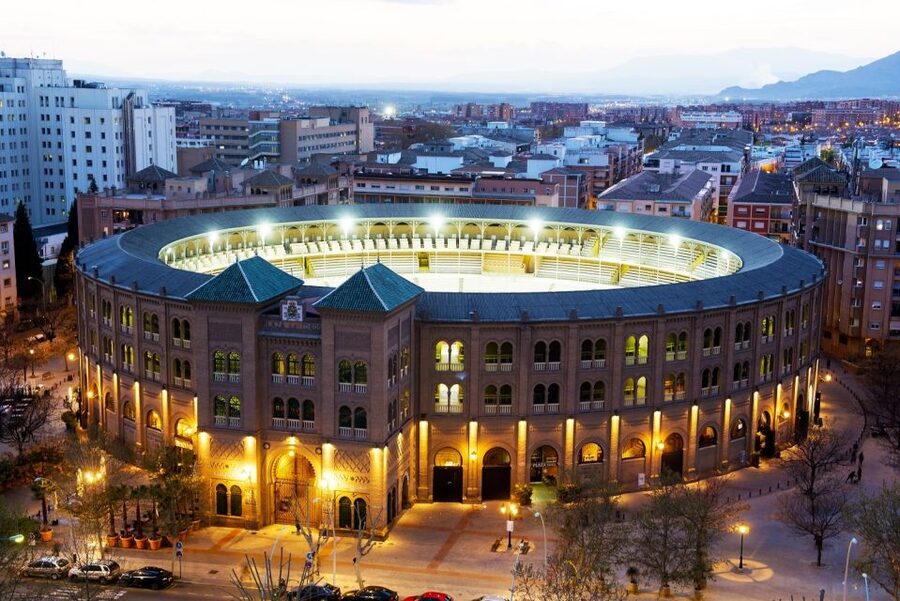
Granada is compact, but it is not flat. The lower center is easy to explore on foot. The climb toward the Alhambra and the higher Albaicín viewpoints is another matter. The train gives you a simple way to see those areas without turning every sightseeing stop into a workout.
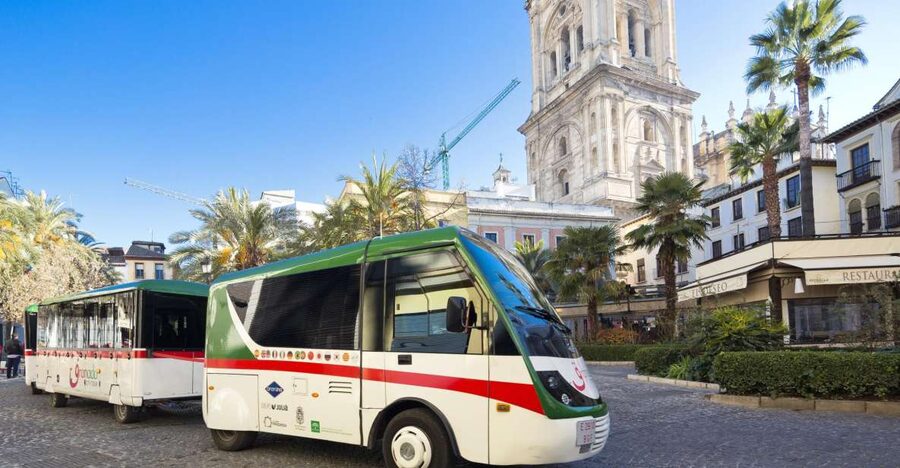
The route is not a polished coach ride on broad avenues. It is a small open carriage designed for streets where a normal bus would struggle. That is part of its charm, but also part of its limitation. You hear the city, feel the cobbles, and occasionally wait while the driver handles a tight turn or an oncoming vehicle.
I would use this experience early in a Granada visit. Take a full circuit first, listen to the commentary, and mark the places you want to explore later. This gives you a useful mental map before you spend time inside the Alhambra, wandering the old center, or climbing through the Albaicín.
The service runs along the Alhambra Route, also called the green line. Trains are scheduled every 30 to 45 minutes, though the actual wait can feel longer when a carriage is full or traffic slows the route. On quiet days, the system can function almost like local transportation. On holiday weekends and in high season, you may need patience.
More city highlights and viewpoint walks:
- Private Alhambra Highlights Tour Including the Nasrid Palaces
★ 5.0 · 423 reviews - Granada City Center and Albaicin Private Tour
★ 5.0 · 181 reviews - Granada: Historic Center and Lower Albaicin Walking Tour
★ 4.7 · 136 reviews
Stop 1: Alhambra Generalife ticket office
The route begins at the Alhambra Generalife ticket office, making this the most useful stop if the hill is your main concern. The train brings you close to the monument complex, though your city train ticket does not include admission to the Alhambra itself.
If you already have timed Alhambra tickets, check the exact entry point and allow enough time to walk from the train stop. The train is transport, not a replacement for your timed monument reservation. Arriving at the right area is helpful, but it does not remove the need to plan your visit.
This stop also works well as the start of a sightseeing circuit. You can ride downhill toward the center, then decide later if you want to return up by train. One practical plan is to visit the Alhambra first, then spend the rest of the day walking downhill through Granada.
Stop 2: Alhambra and Puerta de la Justicia
The second Alhambra stop is at Puerta de la Justicia, one of the recognizable entrances to the complex. It puts you near the monument without forcing you to begin your day with the full uphill walk from the center.
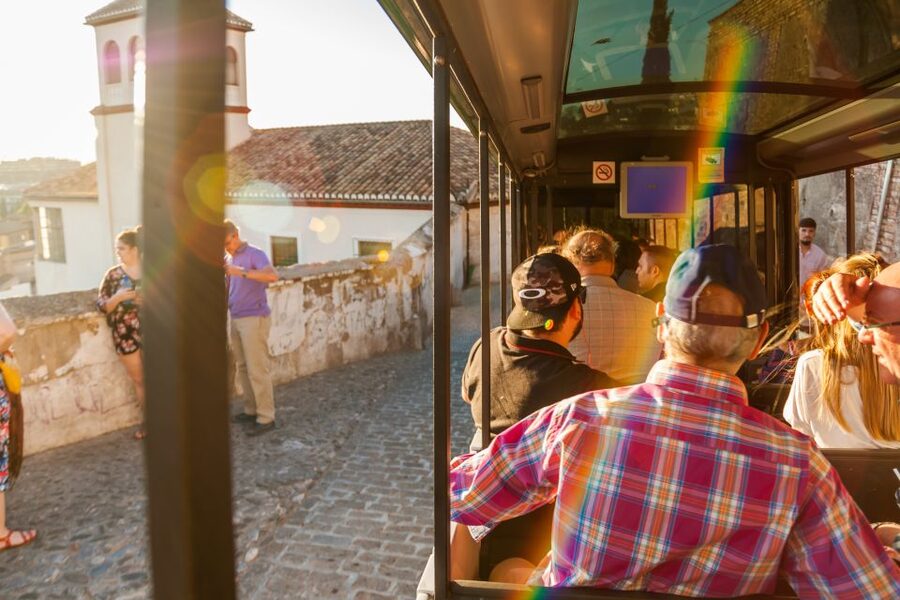
The train route itself gives you a sense of Granada’s changing shape. Lower streets feel urban and busy, while the approach to the Alhambra becomes more wooded and steep. The open carriage lets you see the turns and views along the way, though it also exposes you to sun, wind, and road noise.
From Monday through Friday, the train does not make regular Alhambra runs from 2:00 p.m. to 2:30 p.m. The closure is due to a municipal regulation affecting access through Cuesta del Caidero. Plan around that half-hour gap if you are using the train to reach an afternoon entry time.
Stop 3: Plaza Nueva
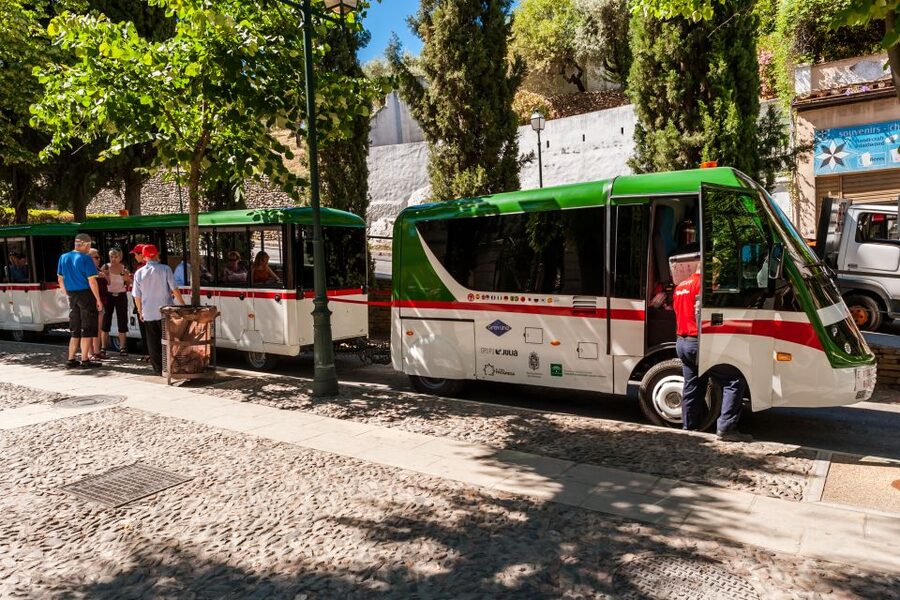
Plaza Nueva is Granada’s oldest square and one of the best places to break your ride. It sits at the meeting point of the lower center, the road toward the Alhambra, and routes into the old quarters.
Get off here for a coffee, a short rest, or a first look at the city’s street life. The stop is also a good base for walking toward the cathedral and the narrow streets around the historic center. If you are using a one-day ticket, this is an easy place to divide your day into short visits.
The train can be busy here because Plaza Nueva is central and convenient. If a full carriage arrives, you may need to wait for the next one. That is less painful if you treat the square as part of the visit rather than standing at the curb watching the clock.
More entry tickets and combo passes:
- Granada: Alhambra & Nasrid Palaces Tour with Tickets
★ 4.7 · 19,801 reviews - Granada: Alhambra and Nasrid Palaces Entry Ticket
★ 4.6 · 15,130 reviews - Granada: Alhambra Entry Ticket with Audio Guide
★ 4.1 · 5,950 reviews - Granada: Alhambra Ticket and Guided Tour with Nasrid Palaces
★ 4.7 · 3,496 reviews
Stop 4: Alhóndiga
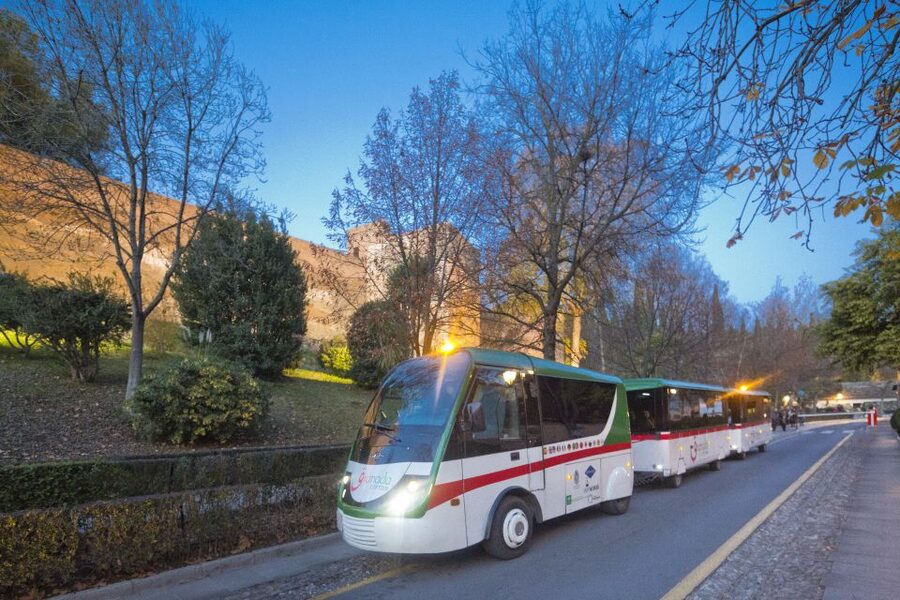
The Alhóndiga stop serves the central shopping and walking area. It is useful for combining the train with a casual stroll through the lower city, especially if you want a break from monuments.
This is not the most scenic part of the circuit, but it helps connect the major sights. You can use it as a practical stop when moving between the old center and the cathedral area. The train is not simply a sightseeing loop here. With a hop-on hop-off ticket, it can save time between separate walks.
Stop 5: Catedral and Capilla Real
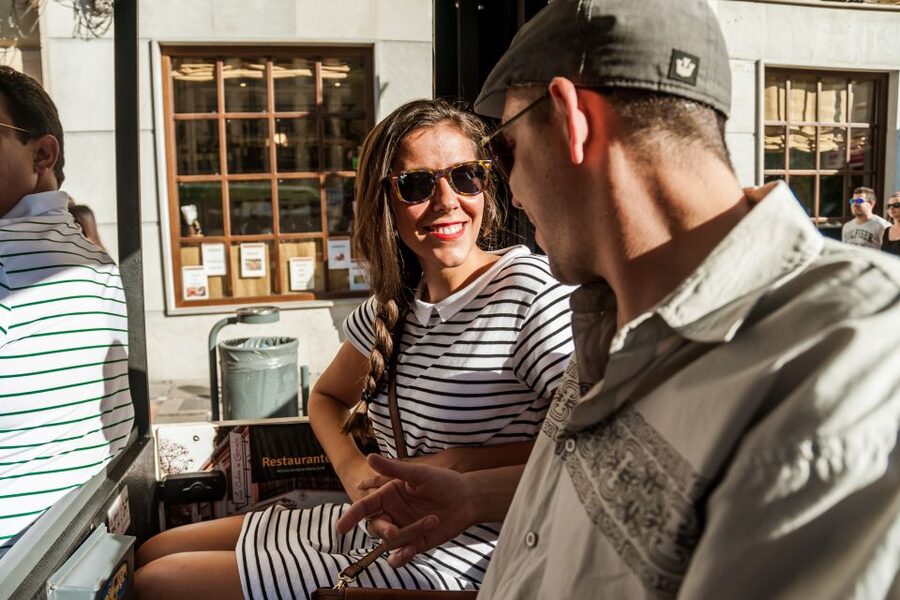
The Cathedral of Granada and Royal Chapel are among the route’s most important central sights. The stop places you within easy reach of the city’s grand religious architecture and the center’s busy pedestrian streets.
Use the audio commentary as an introduction, then decide how much time you want inside the buildings. The recorded information is available in 12 languages, but you must bring headphones. A phone-style headset or standard personal headphones are the sensible choice, since headphones are not supplied.
This stop is also a good reason to take the full circuit before getting off. From the train, you can compare the cathedral’s large stone presence with Granada’s smaller lanes and hill districts. The contrast is one of the pleasures of this short route.
Stop 6: Mirador de San Cristóbal and Jardines de Zoraya
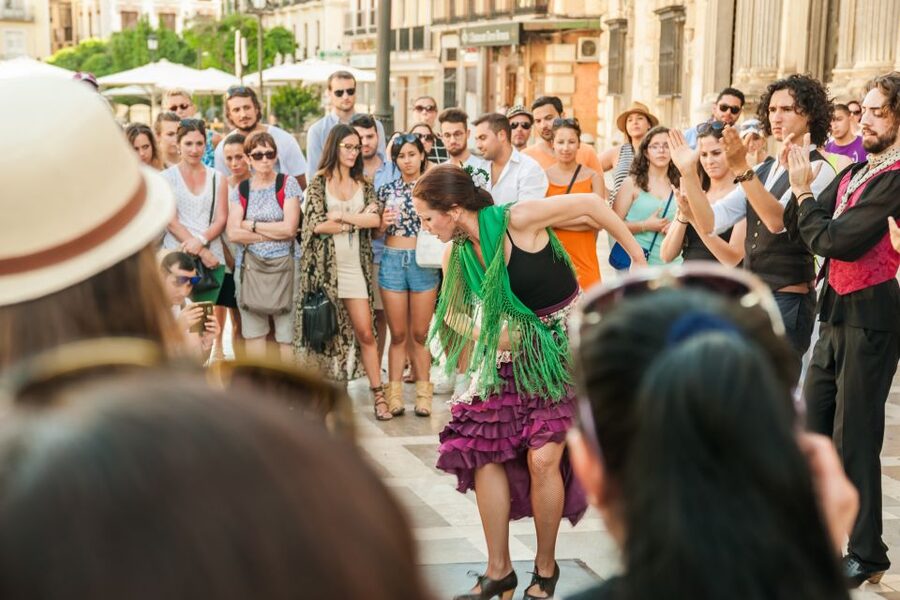
The stop at Mirador de San Cristóbal gives you one of the route’s best high viewpoints. It is a good choice if you want a broad look across Granada without making the entire climb on foot.
Jardines de Zoraya is nearby, adding another point of interest to this part of the route. The exact value of the stop depends on your plans, but the viewpoint makes it worthwhile even if you are not visiting every nearby site.
A practical tip is to consider this stop near sunset. One visitor specifically found it ideal for that time of day. Still, check the operating hours for your date, since special schedules can shorten service and evening availability is not guaranteed by the standard daytime timetable.
Stop 7: Arco de Elvira and Hospital Real
The Arco de Elvira marks an important historic entrance toward Granada’s old northern quarter. Nearby Hospital Real adds a substantial architectural stop, with the area offering a different feel from the cathedral and Plaza Nueva.
This is a useful place to get off if you want to explore around the old city’s edges rather than remain on the main tourist path. It also connects well with the general direction of the Albaicín and the university area.
Because the streets can be narrow and traffic conditions change, the train may move slowly here. That is not necessarily a problem. The slow pace gives you time to look around, but it can affect your plan if you are trying to catch a timed reservation elsewhere.
Stop 8: Calle Reyes Católicos and Plaza Isabel la Católica

This stop serves a central stretch of Calle Reyes Católicos and Plaza Isabel la Católica. It is a convenient place to join the route from the lower city, and it puts you close to shops, cafés, and the main walking routes between Plaza Nueva and the cathedral.
If you are staying near the center, this may be your easiest boarding point. You do not have to begin at the Alhambra, although the official route starts there. Check the train’s stop signage and have your digital ticket ready when boarding.
This is also one of the stops most likely to feel busy. Central locations attract people throughout the day, and a full train may mean waiting for the next departure.
Stop 9: Calle Molinos and Campo del Príncipe
The Campo del Príncipe area sits in the Realejo, Granada’s old Jewish quarter. Its broad square provides a welcome change from the tight streets and makes a pleasant place to pause.
This stop suits you if you want to explore beyond the cathedral and Alhambra approach. The Realejo has its own character, with lanes, gardens, and hillside streets that reward slow walking. The train gives you the uphill connection, while you can make the return journey at your own pace.
The ride through this section can be rough. Cobblestones produce a steady shake, and the open carriage may brake sharply on tight streets. If you have a chronic back problem, the jolting is worth taking seriously. For most people, it is manageable, but this is not a smooth airport shuttle.
Stop 10: Carmen de Los Mártires
The final listed stop is Carmen de Los Mártires, near the Alhambra grounds. A Carmen is a traditional Granada house with gardens, and this stop gives you access to a quieter side of the hill.
It is a useful pairing with the Alhambra stops. You can spend time around the upper district, then ride back toward the center rather than retracing the climb. The stop also helps show why Granada is better understood as a collection of distinct neighborhoods than as one flat old town.
The full route can be completed in about an hour and a half, depending on traffic and waiting. A full ride without getting off is worthwhile on your first trip. It shows you where the stops sit and helps you decide which parts deserve a longer visit.
One trip, one day, or two days?
The one-trip option is the simplest choice if you want an overview. Ride the complete route, listen to the commentary, and use the journey to decide where to return. It is particularly good for a short stay or for anyone who prefers walking once oriented.
The one-day ticket gives you more freedom. You can get off at the cathedral, walk through the center, board again at Plaza Nueva, and continue toward a viewpoint or the Alhambra area. At about $8, it can pay for itself quickly if it saves even one long uphill walk or a separate local transport fare.
The two-day ticket makes sense if your schedule allows a slower visit. You can use the first day for a complete circuit and central sights, then use the second for selected stops around the Alhambra, Realejo, and viewpoints. It is also helpful if you want to treat the train as transportation rather than trying to complete every stop in one packed day.
Do not choose the longer ticket simply because it sounds better. Granada’s center is walkable, and some people will find walking quicker than waiting for a full train. The two-day option is most useful if hills, heat, limited mobility, or a relaxed pace matter to you.
The audio guide and the ride itself
The audio guide is included and available in 12 languages. It adds context while you move between sights, making the train more than a basic shuttle. The information is most useful on the first circuit, when you are learning the city’s layout.
Bring headphones from home. This detail is easy to miss, and without them you may not get the full benefit of the commentary. The supplier does not include headphones, so do not count on receiving a pair at the stop.
The carriage is open, which gives you better views than a closed vehicle in many places. You will see more of the surrounding streets and sky, but you also get more noise from traffic and more exposure to the weather. The train is clean and well maintained according to the operating experience provided, and drivers are generally courteous and helpful.
The ride has real physical character. Expect creaks, squeaks, sudden braking, and a pronounced bump over old stone roads. A door was reported opening while the train was moving on one occasion, so keep bags and children secure and follow staff instructions.
Crowds, waiting, and the best way to board
The main weakness is capacity. At popular stops, many people may be waiting, and a full train can pass without offering a seat. Holiday weekends and summer afternoons are the riskiest periods for long waits, with waits of an hour or more possible in especially busy conditions.
You can reduce the problem with a simple plan:
- Start early, before the busiest sightseeing period.
- Take a complete circuit before committing to several stops.
- Board at the route’s starting point when possible, since you have a better chance of finding a seat.
- Avoid building a tight schedule around the 30 to 45 minute timetable.
- If a stop is only a short walk from your next destination, walk instead of waiting.
On quieter days, the service can be much easier. Some rides have involved waits of only a few minutes, with plenty of room after the first full train. You should think of the timetable as a guide rather than a promise, since traffic, city events, adverse conditions, and other factors can affect service.
Baby strollers are permitted if folded dimensions do not exceed 35 centimeters in height and 55 centimeters in width. You should be ready to fold the stroller before boarding.
Is the $8 fare good value?
At about $8 per person, this is one of Granada’s lower-cost sightseeing options. The value is strongest when you use it to reach the Alhambra hill, connect several distant stops, or gain an overview during a short visit.
The one-trip ticket gives you orientation for very little money. The one-day pass is a better deal if you plan to get off two or three times. The two-day ticket is useful for a relaxed schedule, but only if you actually plan to reuse it.
The fare does not buy entry to the Alhambra, cathedral, Royal Chapel, or other attractions. It covers the train and audio guide. Think of it as sightseeing transport with commentary, not an attraction ticket bundle.
Who should book this experience?
I would recommend it to first-time visitors, people with limited time, anyone who wants help with Granada’s hills, and families who enjoy a simple ride between major sights. It is also a good first-day activity because it helps you understand the city before you choose where to spend longer stretches on foot.
It suits you less if you dislike noisy rides, need a smooth vehicle, or have a strict timetable. Fit walkers may find the lower center faster on foot, especially when trains are crowded. Anyone with back trouble should weigh the bumpy road surface before booking.
Free cancellation is available up to 24 hours before the activity, and you can reserve now and pay later. Special hours apply around Easter and Christmas. Service is listed from 9:00 a.m. to 3:00 p.m. on April 10 to 16, from 4:00 p.m. to 8:00 p.m. on April 17, and from 10:00 a.m. to 4:00 p.m. on December 24 and 31 and January 5.
Should you book the Granada City Train?
Book it if you want an inexpensive city overview and a practical lift to the Alhambra area. I would choose the one-day ticket for most visits, take one full circuit first, and use the train selectively after that.
If your visit falls on a holiday weekend or in the height of summer, build in extra time and expect possible crowding. The train is bumpy and not always fast, but at this price it offers something useful: a broad look at Granada, a break from the hills, and easy access to several neighborhoods that you might otherwise skip.
FAQ
Where does the Granada City Train route start?
The route starts at Alhambra Generalife, at the ticket office designated as Stop 1.
How often do the trains run?
The Alhambra Route trains are scheduled every 30 to 45 minutes.
Does the ticket include entry to the Alhambra?
No. The ticket takes you to the Alhambra area, but admission to the monument is not included.
Which ticket options are available?
You can choose a one-trip ticket, a one-day hop-on hop-off ticket, or a two-day hop-on hop-off ticket.
What languages are available for the audio guide?
The audio guide is available in Spanish, Catalan, Chinese, English, French, German, Italian, Japanese, Arabic, Portuguese, Russian, and Korean.
Do I need to bring headphones?
Yes. Headphones are required for the audio guide and are not included.
Can I use the train to reach Plaza Nueva?
Yes. Plaza Nueva is one of the listed stops on the Alhambra Route.
Does the train stop near Granada Cathedral?
Yes. The Catedral and Capilla Real stop serves Granada Cathedral and the Royal Chapel.
Can I bring a baby stroller?
Yes, but it must be folded and cannot exceed 35 centimeters in height and 55 centimeters in width when folded.
Is there a break in Alhambra service during the day?
From Monday to Friday, regular train rides to the Alhambra pause from 2:00 p.m. to 2:30 p.m. due to a municipal access regulation.
Just added around Granada
- Granada: Alhambra tickets and other attractions★ 5.0 · 3 reviews
- Antequera and Torcal from Granada in a small group up to 7 people★ 4.5 · 3 reviews
- Granada Private Tapas & Walking Tour★ 4.5 · 3 reviews
- Albaicin and Sacromonte Private Tour★ 4.5 · 3 reviews
- Complete Private Tour of Alhambra with Nasrid Palaces★ 4.5 · 3 reviews
- Sierra Nevada Small Group BIKE Tour★ 5.0 · 3 reviews
- Private Tour of the Alhambra★ 5.0 · 3 reviews
- Granada: Guided Albaicín Visit with Pets★ 5.0 · 3 reviews
Granada City Highlights & Viewpoints, compared.
Private Alhambra Highlights Tour Including the Nasrid Palaces
Read our review →
Historic Center and Lower Albaicin Walking Tour
Read our review →

Granada Highlights Tour with Tapas Breaks by Electric Bike
Read our review →
Highlights & Viewpoints eBike Tour with Tapas Break
Read our review →Browse the lists this tour appears in