
Reviewed · GRANADA CRAFT WORKSHOPS & CLASSES
Granada: “Alhambra´s Craft Workshop”
A small piece of the Alhambra’s decorative world can be more memorable than another souvenir from a shop. In this two-hour central Granada workshop, you choose a project, learn the basic technique from an artisan, and take your finished work home.
I like the wide choice of projects, from painting a Nasrid tile to building a marquetry chessboard. I also like the calm, hands-on pace and the chance to work with proper tools and materials. The main consideration is that children under six and wheelchair users cannot take part, and the chessboard may cost extra if you want it glazed.
In This Review
- Key details at a glance
- Why this Alhambra craft class feels different
- Arriving at C. Horno de Haza, 29
- Choosing your Andalusian project
- Working with Frédéric, Fred, or Frederick
- What the two hours are really like
- How much value do you get for $69?
- Who should book this workshop?
- Practical planning before you go
- Should you book the Alhambra Craft Workshop?
- FAQ
- Where does the workshop take place?
- How long does the activity last?
- What can I make during the class?
- Are tools and materials included?
- Can I take my finished piece home?
- Is the activity suitable for children?
- What languages does the instructor speak?
Key details at a glance
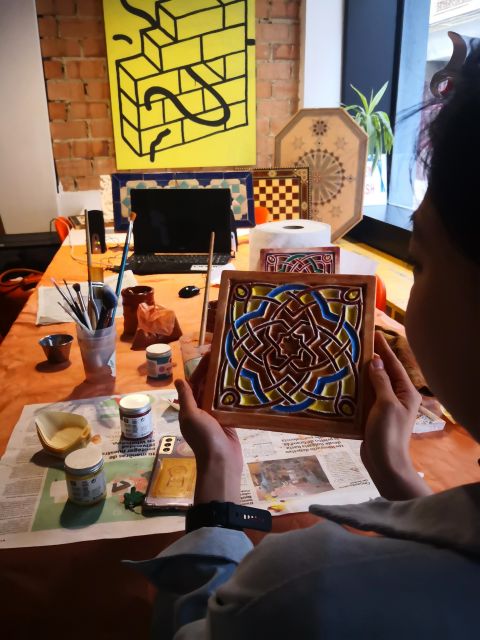
- Choose from about a dozen projects: Try mosaics, painted tiles, polychromatic plasterwork, gold leaf, stucco, marquetry, and other Andalusian designs.
- Meet near Granada Cathedral: The workshop at C. Horno de Haza, 29, is about 500 meters from the cathedral.
- Work with an artisan guide: Frédéric, also known as Fred or Frederick, gives instructions in English, French, or Spanish.
- Take home your own piece: Your finished craft becomes a personal Granada souvenir, not a factory-made trinket.
- Good for families with older children: The activity welcomes adults and children age six and up, though it is not suitable for wheelchair users.
- Allow two relaxed hours: This is a useful change of pace after busy sightseeing, but it is not a full technical apprenticeship.
Why this Alhambra craft class feels different
Granada is full of things to look at: palace rooms, carved walls, tiled courtyards, and distant mountain views. This workshop asks you to slow down and make something yourself. You do not simply hear about Andalusian decoration. You handle the materials and try the motions behind it.
The focus is not limited to painting. You can work with tile, plaster, stucco, gold leaf, or wood inlay. That variety matters because the Alhambra is not defined by one craft alone. Its visual style comes from the way geometry, surface decoration, color, and careful handwork fit together.
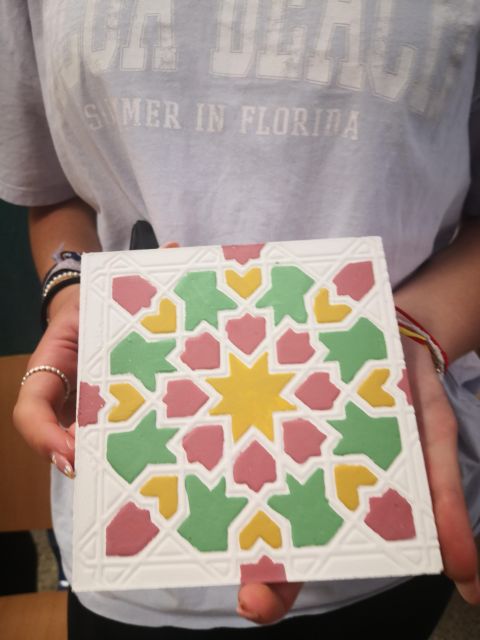
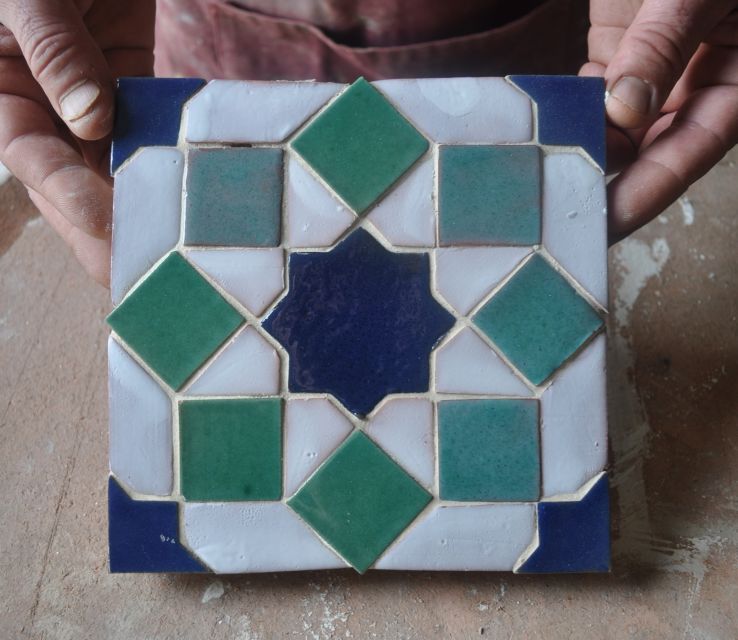
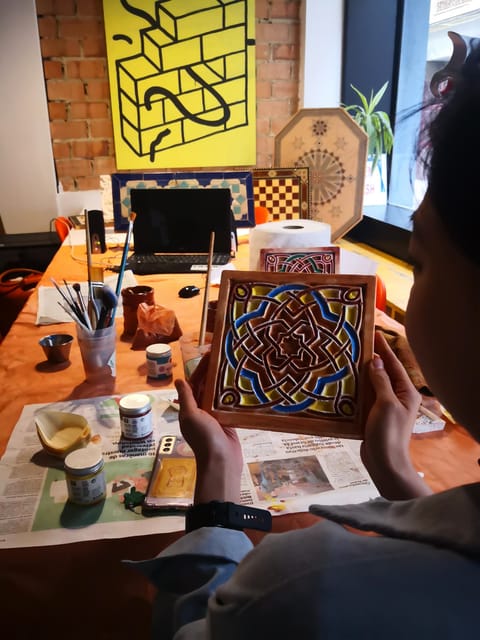
You begin by choosing one project from roughly a dozen options. The exact selection can include an authentic mosaic tile panel, a painted Nasrid tile, a reproduction of the Alhambra in colorful plasterwork, a carved stucco piece, or a small marquetry chessboard. The range lets you pick according to your patience, artistic confidence, and interest.
You should not expect to leave with a palace-sized wall panel. You will make a manageable decorative object, guided by someone who knows the methods. That is the point. The workshop gives you a short, approachable introduction rather than pretending two hours can turn you into a master craftsman.
More hands-on workshops and classes:
- Drawing and Painting Class of Alhambra in Granada
★ 5.0 · 27 reviews - Granada: Perfume Workshop
★ 4.9 · 18 reviews - 2 hours Craft workshop “The Alhambra with your hands”
★ 5.0 · 11 reviews
Arriving at C. Horno de Haza, 29
The meeting point is the art school at C. Horno de Haza, 29, in central Granada, about 500 meters from the cathedral. There is no hotel pickup, so you need to make your own way there and look for the workshop entrance.
This central location works well if you are already exploring the old center. You can pair the class with time around the cathedral and nearby streets instead of setting aside a separate trip outside town. Still, give yourself enough time to find the address. The instructions say your craftsman will be waiting inside the workshop, so you should not expect a large street-side tour desk.
The venue is described as a cozy fine arts space. That atmosphere suits the activity. You are there to sit, concentrate, and work with your hands, not to rush from one sight to another. The setting also makes this a practical option on a hot afternoon or after a morning packed with Granada’s major sights.
No food or drinks are included. That is not a serious problem for a two-hour class, but plan a café stop before or after if you want a longer break in your schedule.
Choosing your Andalusian project
The most important decision comes early: what do you want to make?
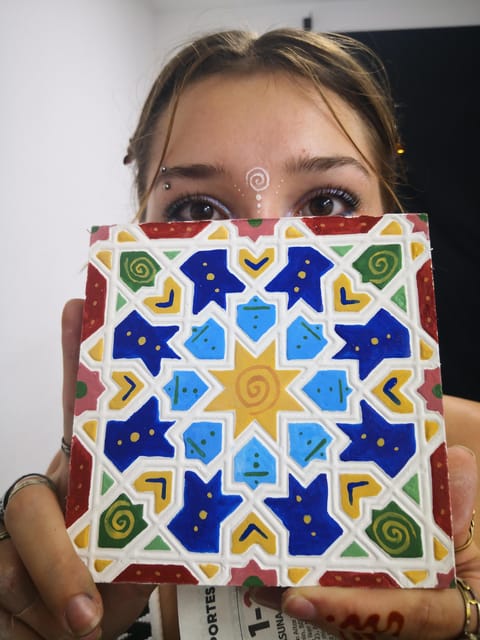
A mosaic tile panel is a natural choice if you want the strongest visual connection to the Alhambra. Geometric tile patterns are central to the decorative style associated with the palace, and assembling the design gives you a feel for the patience such work requires.
Painting a Nasrid tile offers a simpler entry point. It may suit you if you want a colorful souvenir without taking on as much construction. It also works well for children who are old enough to follow instructions but may not yet have the patience for a more demanding project.
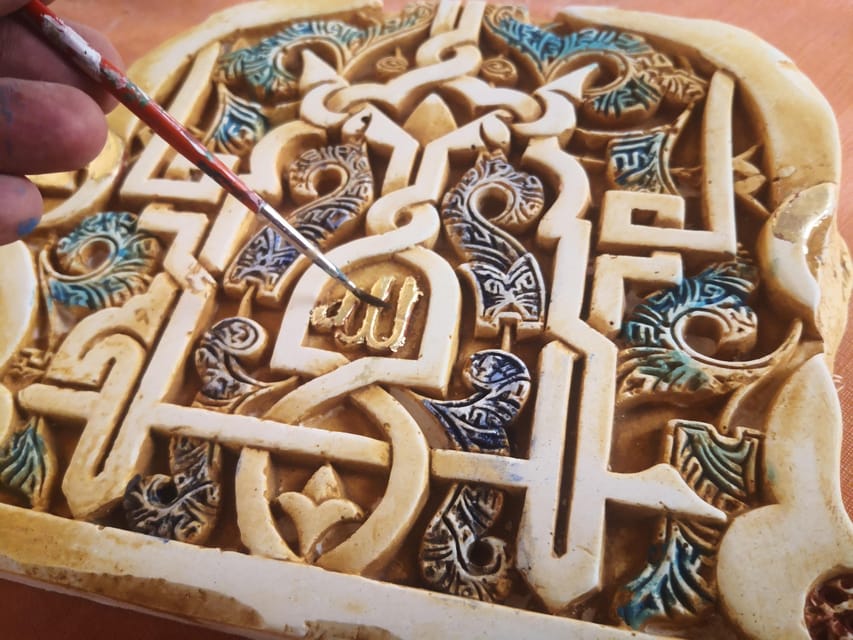
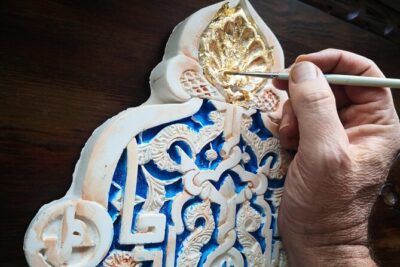
The polychromatic plasterwork with gold leaf adds a decorative flourish. You work on a reproduction inspired by the Alhambra and use color and gold to give it a more finished, ornamental look. This choice may appeal to you if you want a display piece with a touch of sparkle.
You can also create a stucco piece using a direct carving method associated with al-Andalus. This option gives you a closer look at the work behind carved plaster decoration. It is a good pick if you enjoy texture and shape more than painting.
The marquetry chessboard is the most ambitious-sounding choice. You learn basic ideas behind Granadan wood inlay while building a functional object. If you want the board glazed by the artisans, that costs extra, and you should ask about the charge at the start of the activity.
Other projects are available, so the exact choices may vary. Ask the instructor to explain the time and difficulty of each piece before committing. A project that looks simple can require careful hands and steady attention.
Working with Frédéric, Fred, or Frederick
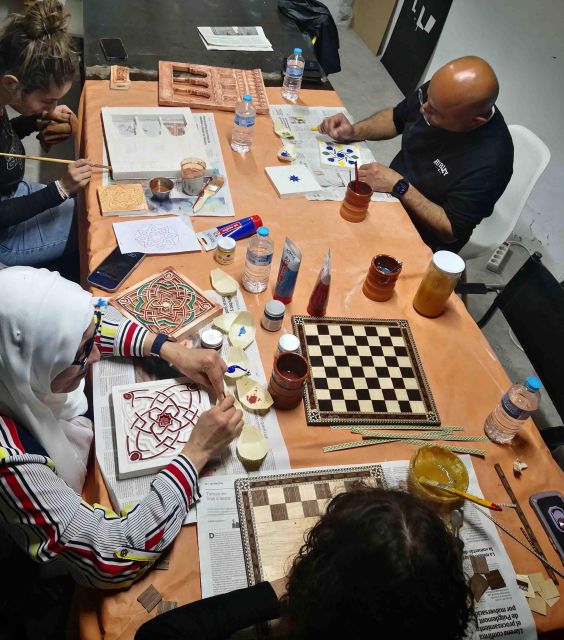
The artisan instructor is identified as Frédéric, with some booking information referring to him as Fred or Frederick. He teaches in English, French, and Spanish, which makes the activity accessible to a broad mix of visitors.
The teaching style is a major part of the experience. You receive the tools and materials, then learn the basic techniques used in Hispanic-Muslim craftsmanship. The instructor explains the process and helps you as you work, rather than leaving you alone with a kit and a set of printed directions.
That personal help matters for crafts such as marquetry and stucco. Small errors in cutting, carving, placement, or decoration can change the finished result. A patient teacher can show you how to correct course before a minor mistake becomes part of the entire piece.
The group atmosphere can also add to the fun. The workshop has been described as a place where music from different cultures, conversation, and laughter help people relax. That does not mean the class is a noisy party. The useful balance is that you have guidance when you need it and time to concentrate when you want to focus.
The instructor has also worked successfully with families that included two children. If you are bringing children, choose a project that matches their attention span and hand control. The minimum age is six, and younger children cannot join.
More Alhambra tours and tickets:
- Granada: Alhambra & Nasrid Palaces Tour with Tickets
★ 4.7 · 19,801 reviews - Granada: Alhambra and Nasrid Palaces Entry Ticket
★ 4.6 · 15,130 reviews - Granada: Alhambra & Generalife Fast-Track Guided Tour
★ 4.7 · 8,313 reviews - Granada: Alhambra & Gardens Tour w/Nasrid Palaces Option
★ 4.5 · 6,437 reviews
What the two hours are really like
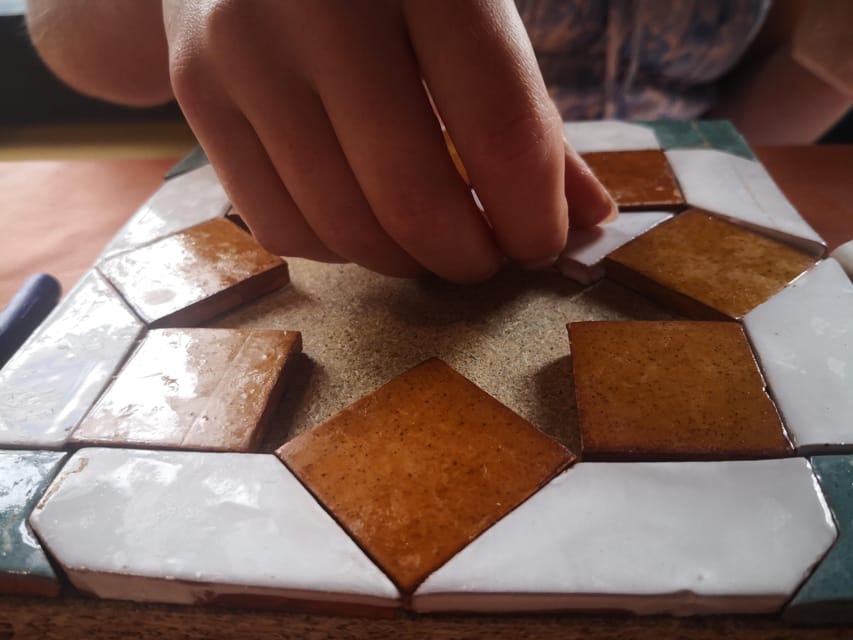
The class follows a simple rhythm. You arrive, meet the artisan, review the available projects, and select the piece you want to create. The instructor then introduces the relevant tools, materials, and decorative method.
The practical teaching covers more than the final brushstroke. You learn the basic ideas behind Arab decoration and see how traditional craft methods are adapted into a small take-home project. That context gives the souvenir more meaning. You can tell people at home what you made and which technique you tried.
Then you work. Some parts may feel easy, while others require patience. Painting can be relaxing, but achieving neat decoration takes care. Mosaic work calls for attention to arrangement. Wood inlay demands precision. Carving asks you to control pressure and accept that hand-made work will not look machine-perfect.
This is a good activity after a crowded sightseeing schedule because the pace changes completely. You sit down, use your hands, and concentrate on one object. It gives your eyes a rest from palace walls and city maps, while still keeping you connected to Granada’s artistic traditions.
At the end, you take your own work home. The piece may not look exactly like a professional artisan’s example, and that is part of its appeal. It records your time in Granada in a way a standard ceramic magnet cannot.
How much value do you get for $69?
The price is $69 per person for two hours. That is not the cheapest way to spend an afternoon in Granada, especially if you are traveling with a large family. The value depends on what you want from a souvenir and how much you care about doing rather than simply seeing.
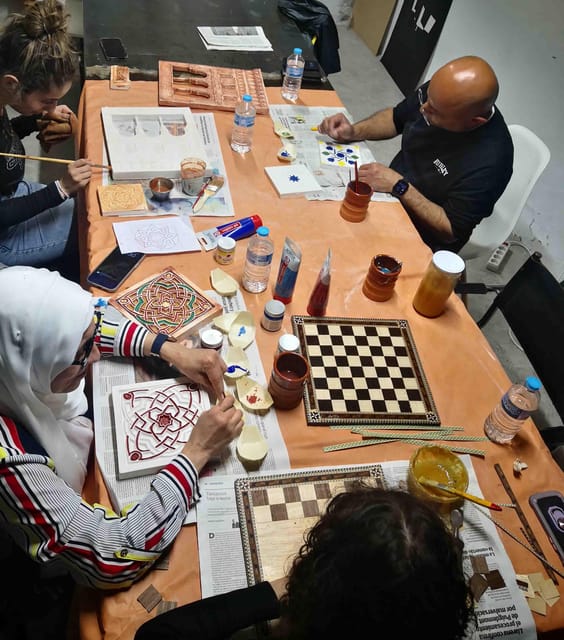
The fee includes an artisan specializing in Hispanic-Muslim craftsmanship, the tools and materials, access to about a dozen projects, and the finished piece you make. You also receive direct help and an introduction to several traditional techniques. Those inclusions make the cost easier to justify than a simple paint-and-take-home activity.
You are paying for instruction, not just supplies. The value is strongest if you choose a project that uses a technique you genuinely want to understand. A painted tile may offer a lighter, easier session. A marquetry board or carved stucco piece may feel more substantial if you want a more involved craft.
The extra charge for glazing the chessboard is worth noting. Ask about it before you begin so you know the final cost. No food, drinks, or transportation are included, but the central location keeps the logistics simple.
For a couple, a family with older children, or anyone who enjoys creative work, the price can be fair. If you dislike crafts or want every minute devoted to major monuments, you will likely find better value elsewhere.
Who should book this workshop?
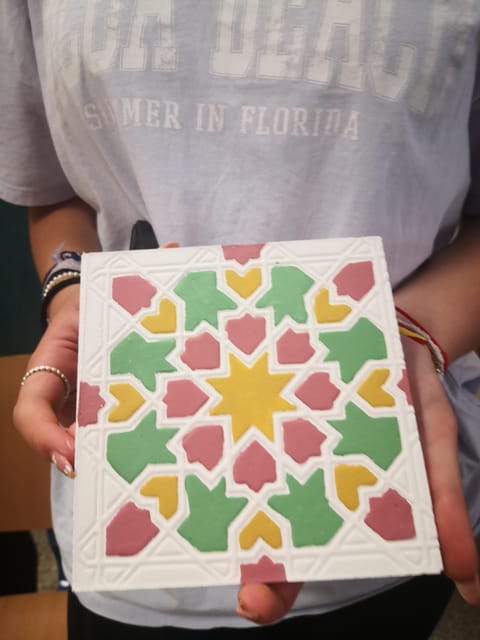
I would recommend it to adults who enjoy art, history, design, or quiet hands-on activities. It is also a strong family choice for children six and older, provided they can sit, listen, and work carefully for part of the two-hour session.
It suits you especially well if you have already spent hours touring monuments and want a change of pace. The class is also useful for a rainy day or a hot part of the afternoon, since the activity takes place indoors at a central art school.
Couples may enjoy choosing different projects and comparing the results. A parent and child can work side by side without needing advanced artistic skills. Solo visitors can join the class and meet other people through the shared work, though the supplied information does not specify the group size.
You should think twice if you need step-free access. The activity is listed as unsuitable for wheelchair users. You should also be realistic about the finished product. This is an introductory workshop, not a professional certification course, and your piece will show your own level of experience.
Practical planning before you go
The activity lasts two hours, with starting times available according to the date you choose. Build a little space around it rather than scheduling a major timed attraction immediately afterward. Creative work can take longer than expected, especially if you are deciding between several projects.
Wear something you can work comfortably in. The information does not specify a dress code or protective clothing, so ask the instructor about any special concerns when you arrive. The workshop supplies the listed tools and materials.
The class is offered in English, French, and Spanish. Choose the language that lets you understand instructions about cutting, carving, painting, or placing materials most clearly.
You can cancel up to 24 hours before the activity for a full refund. The reserve-now, pay-later option also gives you flexibility when your Granada plans are still changing.
The current rating is 4.9 from 32 reviews, with particularly strong praise for the instructor’s patience, clear explanations, relaxed atmosphere, and ability to include children. Those qualities matter here because the teacher shapes the experience more than the room or the souvenir alone.
Should you book the Alhambra Craft Workshop?
Book it if you want a personal Granada souvenir, enjoy learning by doing, and can spare two unhurried hours in the city center. The mix of mosaic, tile, plaster, stucco, gold leaf, and marquetry gives you more choice than a standard painting class, while the artisan’s help keeps the activity approachable.
Skip it if you are looking for a major monument tour, dislike detailed handwork, or need wheelchair access. Also compare the $69 price with your other plans if you are traveling with several people.
For most art-minded adults, families with children six and up, and anyone needing a quiet break from sightseeing, this is a thoughtful way to connect with Granada’s Andalusian craft traditions. Choose your project carefully, ask about the chessboard glazing fee at the start, and leave room in your luggage for something you made yourself.
FAQ
Where does the workshop take place?
The workshop takes place at C. Horno de Haza, 29, in central Granada. The venue is about 500 meters from Granada Cathedral.
How long does the activity last?
The workshop lasts two hours.
What can I make during the class?
You can choose from about a dozen pieces. Options include a mosaic tile panel, a painted Nasrid tile, polychromatic plasterwork with gold leaf, a carved stucco piece, a marquetry chessboard, and other craft projects.
Are tools and materials included?
Yes. The activity includes the craft art materials and tools needed for your selected project.
Can I take my finished piece home?
Yes. You take home the work of art you create during the workshop.
Is the activity suitable for children?
Children age six and older can take part. Children under six are not permitted.
What languages does the instructor speak?
Instruction is available in English, French, and Spanish.
Just added around Granada
- Granada: Alhambra tickets and other attractions★ 5.0 · 3 reviews
- Antequera and Torcal from Granada in a small group up to 7 people★ 4.5 · 3 reviews
- Granada Private Tapas & Walking Tour★ 4.5 · 3 reviews
- Complete Private Tour of Alhambra with Nasrid Palaces★ 4.5 · 3 reviews
- Albaicin and Sacromonte Private Tour★ 4.5 · 3 reviews
- Sierra Nevada Small Group BIKE Tour★ 5.0 · 3 reviews
- Private Tour of the Alhambra★ 5.0 · 3 reviews
- Granada: Guided Albaicín Visit with Pets★ 5.0 · 3 reviews
Granada Craft Workshops & Classes, compared.
Drawing and Painting Class of Alhambra in Granada
Read our review →
2 hours Craft workshop “The Alhambra with your hands”
Read our review →
Flamenco Class with the Cast of Tablao La Alboreá
Read our review →Browse the lists this tour appears in