
Reviewed · GRANADA
Exhibition Inquisition Instruments of Torture in Granada
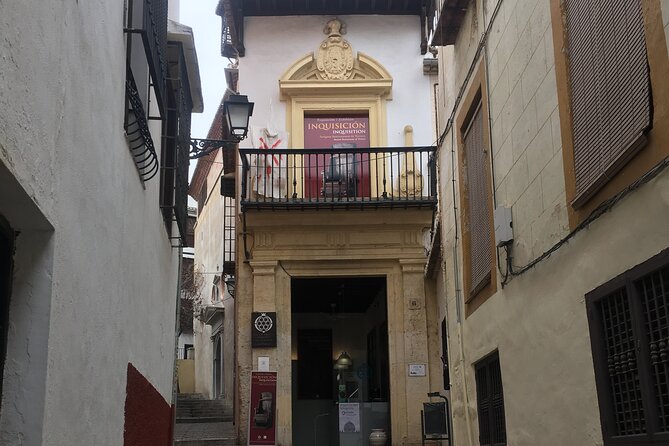
The most striking part of this experience is the setting: a 16th-century palace on the Santa Inés slope, beside the Darro River and below the Alhambra. Inside, you’ll see instruments linked to torture and execution used by ecclesiastical and civil courts across Europe. I like the low $9 price and the easy, self-paced format. The main drawback is its small size and limited historical explanation.
I also like that the visit fits neatly into a walk through the lower Albaicín. You can see the exhibition in roughly 30 minutes and finish at a viewpoint facing the Alhambra. If you want a full account of the Spanish Inquisition, though, this collection may feel too brief and focused on objects rather than background.
In This Review
- Key points to know before you go
- A small museum with a powerful subject
- Reaching the Palacio de los Olvidados in the lower Albaicín
- What you see inside the 16th-century palace
- Why the subject needs historical care
- How long the visit really takes
- The final Alhambra viewpoint
- Is $9 good value?
- Who will enjoy this experience most
- Practical details that matter
- Should you book the Palace of the Forgotten?
- FAQ
- Where is the Exhibition Inquisition Instruments of Torture located?
- How much does admission cost?
- How long does the visit take?
- What are the opening hours?
- Is the exhibition inside a historic building?
- What does the exhibition display?
- Does the ticket include transportation?
- Is a mobile ticket accepted?
- Can I cancel for a refund?
Key points to know before you go
- A 16th-century palace setting: The exhibition occupies the restored Palacio de los Olvidados, near the Darro River at the foot of the Alhambra.
- A short, focused visit: Most people can complete the collection in about 30 minutes, with the stated visit time ranging from 1 to 40 minutes.
- Torture and execution instruments: The displays cover devices associated with inquisitorial courts and civil courts across Europe.
- A useful historical distinction: The exhibition explains that Spanish ecclesiastical courts generally used fewer devices, while civil courts used many of the harsher machines shown.
- An Alhambra viewpoint at the end: Your visit finishes with a view toward one of Granada’s great landmarks.
- Good value at $9: The low admission price makes this an easy add-on, though not a substitute for a larger museum.
A small museum with a powerful subject
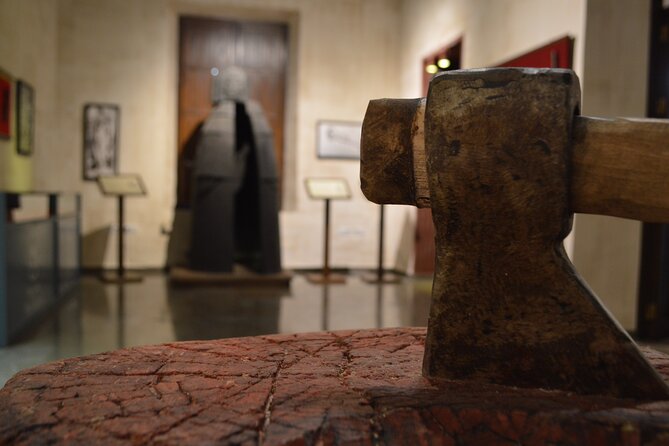
Granada is filled with grand sights, from the Alhambra to the old streets of the Albaicín. The Palacio de los Olvidados offers something different. Its exhibition, Inquisition, Instruments of Torture, presents a compact collection of devices connected with punishment, interrogation, and execution in Europe.
The subject is grim, but the museum does not require half a day. That matters in Granada, where you may already be spending hours at the Alhambra or walking steep lanes through the Albaicín. You can add this stop without rebuilding your whole schedule.
The collection is best understood as a visual introduction rather than a full course in European legal history. You see the objects and learn what they were used for, but the historical material appears to be lighter than the physical display. If you arrive hoping for a long explanation of the Spanish Inquisition, keep your expectations in check.
The visit has an average rating of 3.8 from four reviews, which fits the experience as described: interesting and inexpensive, but small. One clear positive is its brevity. One clear limitation is that you may want more context about the people, courts, and events connected with the devices.
A few more Granada tours worth comparing
- Sacromonte Caves Museum Admission Ticket
★ 4.6 · 502 reviews - Granada: Albaicín, Sacromonte & Museum of Caves Walking Tour
★ 4.9 · 244 reviews
Reaching the Palacio de los Olvidados in the lower Albaicín
The palace sits on the Cuesta de Santa Inés, in the lower Albaicín. This is one of Granada’s most atmospheric areas, with narrow streets and a long mixture of Arab, Sephardic, and Christian influences. The Albaicín was declared a World Heritage Site in 1984.
The location gives the visit much of its appeal. You are not going to an isolated modern attraction on the edge of town. You are entering an old building near the Darro River, below the Alhambra. The surrounding streets are part of the experience, especially if you are already walking between central Granada and the Albaicín.
The route may include steep or narrow sections because of the neighborhood’s historic layout. The supplied information confirms that the palace is near public transportation, but private transportation is not included. You should plan to reach the site independently.
A mobile ticket is accepted, and booking confirmation is provided at the time of purchase. Opening hours are listed as 10:30 a.m. to 7 p.m. daily for the stated operating periods. That broad schedule gives you room to fit the museum around lunch, an Albaicín walk, or another Granada sight.
What you see inside the 16th-century palace
The Palacio de los Olvidados is a restored 16th-century building. Its walls and position near the Darro help set the tone before you even reach the displays. The exhibition itself is permanent and presents a selection of instruments linked to torture and capital punishment.
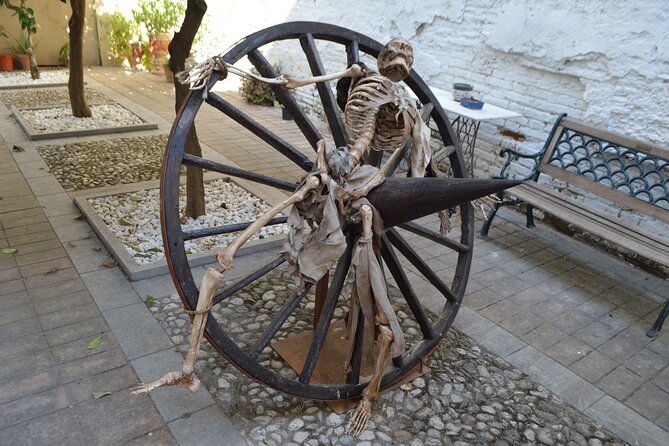
The objects are connected with different inquisitorial courts, both ecclesiastical and civil, across Europe. That distinction is important. The display is not simply a collection of objects labeled as Spanish Inquisition devices. It places many of the harsher machines in a wider European and civil-court setting.
The information provided makes a useful point about Spanish ecclesiastical courts. They were relatively sparing in their use of torture instruments, with the garrucha, guitar, and rack identified as the main devices used. Civil courts in Spain and elsewhere were particularly cruel toward groups that authorities considered dangerous to social order. Many of the machines displayed come from that broader civil tradition.
That context helps prevent a common misunderstanding. The presence of a torture device in the museum does not automatically mean it was a standard tool of every Spanish inquisitorial court. I appreciate that the exhibition makes some effort to separate ecclesiastical practice from civil punishment, even if you may still want more detail about dates and individual cases.
Expect the objects to carry much of the visit. The museum is not described as a large, room-by-room historical center, and the available visit time is short. Read the labels carefully if you want to get the most from it. A quick glance at the machines will take less time than a thoughtful look at what each one represented.
Why the subject needs historical care
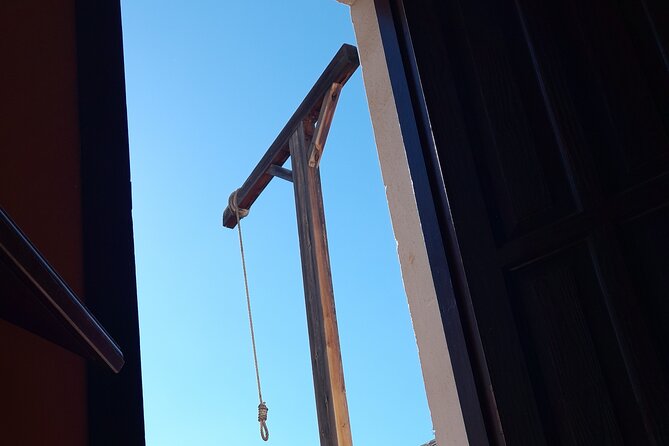
Torture museums can easily become sensational. Their displays attract attention because the objects are disturbing, but the real value comes from understanding how courts used fear, punishment, and public authority.
Here, the most useful historical idea is the difference between ecclesiastical and civil courts. Inquisitorial institutions are often treated as one single system, but the information presented for this exhibition points to a more complicated picture. Courts varied by country, purpose, and authority. Some were religious, while others were civil. Their practices were not identical.
The exhibition also reminds you that punishment was not only about extracting information. Capital punishment and public control formed part of the legal systems of the period. The machines are physical evidence of how authorities dealt with people they labeled dangerous or unacceptable.
Still, the historical framing seems limited compared with the number of devices. One review described the museum as interesting but wished it included more about the history of the Inquisition. I share that caution. You can leave with a strong impression of the instruments while knowing less about the political and religious forces behind them.
For that reason, I would pair this visit with a broader walk through Granada’s old quarters. The Albaicín and the area around the Darro give you a wider sense of the city’s Arab, Sephardic, Jewish, and Christian past. The museum then becomes one dark chapter in a much larger story, rather than your only source of information about the period.
A different sort of day out in Granada:
- Granada: Alhambra & Nasrid Palaces Tour with Tickets
★ 4.7 · 19,801 reviews - Granada: Alhambra and Nasrid Palaces Entry Ticket
★ 4.6 · 15,130 reviews - Granada: Alhambra & Generalife Fast-Track Guided Tour
★ 4.7 · 8,313 reviews - Granada: Alhambra & Gardens Tour w/Nasrid Palaces Option
★ 4.5 · 6,437 reviews
How long the visit really takes
The stated duration ranges from 1 to 40 minutes, but about 30 minutes is a sensible plan. The collection is small enough that you can see it without rushing, and short enough to fit between other stops.
That timing is a strength if you have a busy Granada itinerary. You do not need to reserve an entire morning. A 30-minute visit can work before or after a walk along the Darro, a climb through the Albaicín, or a visit to the Alhambra area.
The short format is also the main limitation. If you enjoy museums with detailed panels, large collections, and several historical rooms, you may finish sooner than expected. One review specifically described the museum as brief but interesting and noted that it could be completed in around 30 minutes.
I would not plan a special trip across Granada for this museum alone unless the subject strongly interests you. It makes more sense as part of a day in the lower Albaicín. The palace’s location and the final viewpoint add value that the small exhibition by itself may not provide.
The final Alhambra viewpoint
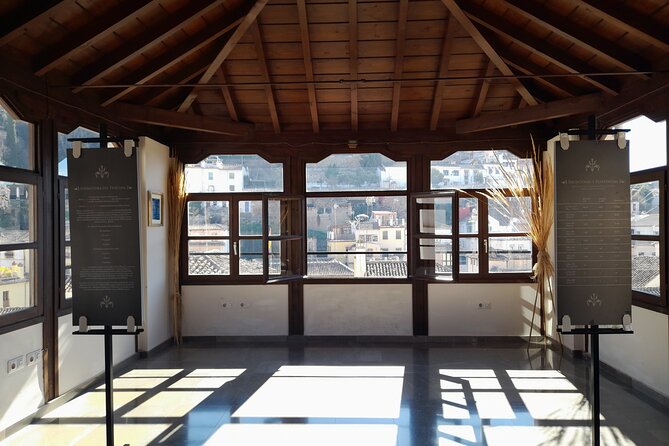
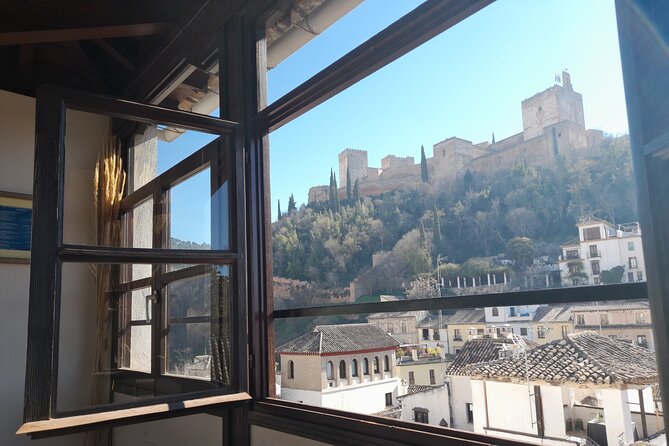
The visit ends at a viewpoint overlooking the Alhambra. This is a welcome change of mood after the dark subject of the exhibition.
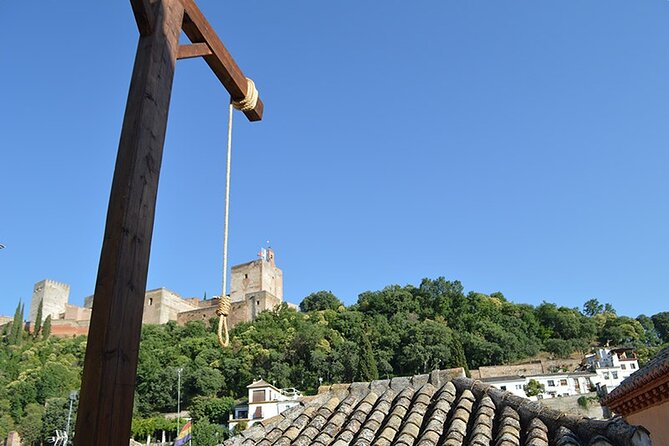
The view also gives the palace a strong geographical setting. You are seeing the Alhambra from below, close to the river and in the old neighborhood that grew around Granada’s historic center. The attraction connects a difficult part of European history with one of the city’s most recognizable sights.
The information does not specify the exact size, direction, or conditions of the viewpoint, so I would not treat it as a replacement for Granada’s better-known viewpoints. Still, it is a pleasant finishing point and one reason the experience offers more than a basic indoor display.
If you are already exploring the Albaicín, this ending costs no extra time in your schedule. Take a moment there before continuing through the neighborhood. The contrast between the instruments inside and the open view outside is one of the visit’s more memorable details.
Is $9 good value?
At $9, the exhibition is priced as an inexpensive short stop. The value depends on how you use it.
I think the price is fair if you want a compact museum visit in a historic building and you are already nearby. You receive admission and all fees, with no separate charge listed for the viewpoint. The mobile ticket also keeps the entry process simple.
The price is less compelling if you expect a major museum with extensive interpretation. The small size means you are paying for a focused collection, not hours of content. The low cost softens that limitation, but it does not remove it.
For a family or group with mixed interests, the price may make it easier to try without much risk. Most people can participate, and service animals are allowed. Because private transportation is not included, remember that the $9 covers the attraction rather than the full cost of reaching the palace.
Who will enjoy this experience most
I would recommend the Palacio de los Olvidados to you if you enjoy unusual museums, old buildings, and difficult historical subjects. It suits visitors who want something beyond Granada’s major monuments and who appreciate a short stop with a clear theme.
It also works well for a flexible afternoon. The daily hours of 10:30 a.m. to 7 p.m. give you plenty of choice, and the 30-minute visit leaves space for nearby sights.
You may be less satisfied if you want a detailed explanation of the Spanish Inquisition. The available material indicates that the collection gives more attention to instruments than to a long historical narrative. In that case, use this museum as a visual supplement, not your main source.
The experience may also be a poor fit if torture displays are upsetting for you or someone in your group. The subject is exactly what the title suggests. Even at a low price, you should choose it because you are comfortable with that theme.
Practical details that matter
The exhibition is open daily from 10:30 a.m. to 7 p.m. during the listed operating periods. Confirmation arrives when you book, and the ticket is mobile.
You can reach the area using public transportation, but private transportation is not included. The palace is in the lower Albaicín, near the Darro River, so plan the museum as part of your Granada walking route rather than expecting a transport service connected with the ticket.
Free cancellation is available if you cancel at least 24 hours before the experience begins. Cancellations made within 24 hours are not refunded, and changes inside that period are not accepted. The cut-off follows local Granada time.
The provider is AG Flamenco. No guide names are provided, and this appears to be a self-paced exhibition rather than a guided tour with a named historian. That can be convenient, but it also means you should not book it expecting a live lecture.
Should you book the Palace of the Forgotten?
Book it if you want a brief, inexpensive stop in a restored palace and you are interested in the history of punishment in Europe. The $9 admission, central Albaicín location, and Alhambra viewpoint make it easy to add to a day of sightseeing.
Skip it if you want a large museum or a detailed account of the Inquisition. You may find the exhibition too small and the historical explanation too light.
My practical call: treat this as a 30-minute companion to your Albaicín walk, not a headline attraction. That approach matches its strengths and keeps its limits from spoiling your day.
FAQ
Where is the Exhibition Inquisition Instruments of Torture located?
It is inside the Palacio de los Olvidados on the Santa Inés slope in Granada’s lower Albaicín, near the Darro River and at the foot of the Alhambra.
How much does admission cost?
The listed price is $9. All fees and taxes are included.
How long does the visit take?
The stated duration ranges from 1 to 40 minutes. About 30 minutes is a practical amount of time for the small exhibition.
What are the opening hours?
The exhibition is listed as open every day from 10:30 a.m. to 7 p.m. during the provided operating periods.
Is the exhibition inside a historic building?
Yes. The Palacio de los Olvidados is a restored 16th-century palace.
What does the exhibition display?
It presents instruments associated with torture and capital punishment used by ecclesiastical and civil courts across Europe.
Does the ticket include transportation?
No. Private transportation is not included. The site is near public transportation.
Is a mobile ticket accepted?
Yes. The experience includes a mobile ticket, and confirmation is provided at the time of booking.
Can I cancel for a refund?
Yes, if you cancel at least 24 hours before the experience start time. Cancellations made within 24 hours are not refunded, and changes during that period are not accepted.
Just added around Granada
- Granada: Alhambra tickets and other attractions★ 5.0 · 3 reviews
- Antequera and Torcal from Granada in a small group up to 7 people★ 4.5 · 3 reviews
- Granada Private Tapas & Walking Tour★ 4.5 · 3 reviews
- Albaicin and Sacromonte Private Tour★ 4.5 · 3 reviews
- Complete Private Tour of Alhambra with Nasrid Palaces★ 4.5 · 3 reviews
- Sierra Nevada Small Group BIKE Tour★ 5.0 · 3 reviews
- Private Tour of the Alhambra★ 5.0 · 3 reviews
- Granada: Guided Albaicín Visit with Pets★ 5.0 · 3 reviews